Get Full Government Meeting Transcripts, Videos, & Alerts Forever!
Get email alerts on the Policy Changes topic
No spam. Unsubscribe anytime.
Board committee advances AI classroom policy and proposes tougher cell‑phone limits at high school
Summary
Policy and education committees reported an AI policy that defaults to prohibiting student AI use unless a teacher specifically permits it; policy committee recommended moving toward a 'bell‑to‑bell' cell‑phone rule in the high school, with student input and phased implementation after concerns about QR codes and recitation logistics were raised.
The board heard two related governance proposals aimed at classroom practice and committee structure.
Education program committee members reported that district staff identified 11 common classroom uses for AI and proposed a consistent policy: AI tools are "prohibited by default" for students unless a teacher designates specific permitted uses for an assignment. The committee said teachers are developing guidance and professional development on prompting, AI bias and appropriate classroom uses; students told the board they mainly use AI for study guides and test preparation.
Separately, the policy committee proposed revisions to committee structure (combining Government Relations with Community Relations; combining SEL with Education Program) and presented policy/regulation 5516 on electronic communications. Committee members recommended moving the high school toward a "bell‑to‑bell" cell‑phone policy that would prohibit phones during class, study hall and recitation, while allowing limited phone access at lunch and during an initial transition period. The committee emphasized co‑chairs and administrative liaisons would preserve SEL and education priorities after a committee consolidation.
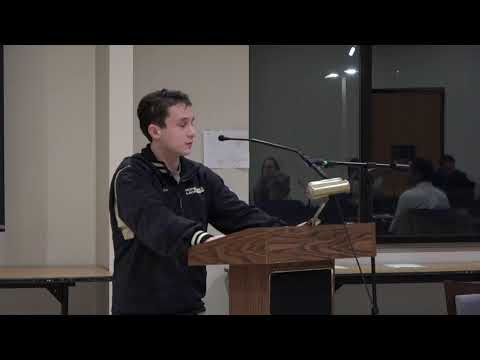
Public comment and a board exchange flagged operational concerns: a community member pointed out district QR codes used during transitions to direct students to alternate rooms when a teacher is absent would rely on phones, and warned that removing phone access during transitions or recitation could disrupt student coordination for group work. Administration said student voice will be included in implementation planning and that they will not finalize a bell‑to‑bell change without further input.
Several policies and regulations were moved from first to second reading and the board recorded roll‑call votes to advance them.