Get Full Government Meeting Transcripts, Videos, & Alerts Forever!
Get email alerts on the Utilities Policy topic
No spam. Unsubscribe anytime.
Osage Beach aldermen debate whether to allow and how to govern utility connections outside city limits
Summary
City staff and the Board of Aldermen discussed options — consent to annex, fixed‑term commitments, homeowner responsibility for grinder stations, metering and thresholds for board review — and directed staff to draft formal agreements rather than enact an immediate ban.
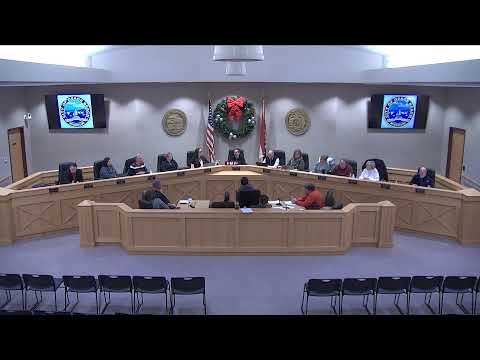
A lengthy, substantive policy discussion at the Osage Beach Board of Aldermen meeting focused on whether and on what terms the city should permit new water and sewer connections outside its corporate limits.
City Attorney Cole Bradbury and City Engineer Drew Bowman outlined the issue: the city has historically accepted outside customers without consistent written agreements, easements or contractual terms. Bradbury told the board that common options include requiring a consent to annex as a condition of connection, requiring a fixed term of service (for example 10, 20 or 30 years), or crafting contracts that make clear who owns and maintains private grinder (package) stations.
Bradbury warned that without written terms the city has limited ability to prevent customers from disconnecting if another provider offers lower rates. “We know from a couple of our sewer customers that they are going to switch to LALO because they’ve been promised a better rate, so they’re gonna unhook from us and hook into them,” Bradbury said, describing a potential revenue and service‑continuity risk.
Board members expressed varied views. Several aldermen supported drafting agreements that would protect the city while allowing connections in appropriate cases. One alderman urged caution about a blanket refusal to accept outside connections, saying the city should not foreclose options that could later benefit system finances. Another emphasized the maintenance burden private grinder stations place on Public Works and supported requiring homeowners to retain responsibility for those pumps if the equipment remains on private property.
Staff provided quantitative context: the city currently serves a reported 460 sewer customers and 54 water customers outside the city limits, numbers officials said should inform any policy decision. Drew Bowman and other staff suggested thresholds that could determine board involvement: small, single‑house grinder stations might be handled administratively, while larger subdivision‑scale requests would come before the board.
Possible policy tools discussed included:
- Requiring a consent to annex from any outside customer as a condition of connection; Bradbury said courts have upheld similar provisions in other jurisdictions. - Requiring a service commitment term (examples discussed included 20 years or longer). - Adopting contracts that accept sewage but place ownership and maintenance responsibility for the grinder station with the homeowner or business. - Implementing metering or billing adjustments to account for unmetered sewer flows and to ensure cost recovery. - Creating a petition or threshold system (by pump size or pipe diameter) so staff can process small requests and the board reviews larger ones.
The board did not adopt a new ordinance at the meeting. Instead, members gave staff direction to draft formal agreements and return with recommended thresholds and administrative procedures, and to include fee‑ or meter‑based approaches to ensure the city recovers costs when assuming new customers’ sewage. The board also discussed options to delegate approval authority for small installs to the city engineer, with the board retaining review of large projects.
Next steps: staff will prepare proposed agreement templates and policy options for future board consideration; no retroactive changes to existing customers were ordered.