Get Full Government Meeting Transcripts, Videos, & Alerts Forever!
Get email alerts on the Student Safety topic
No spam. Unsubscribe anytime.
Hopewell Valley board accepts Student Safety Data Systems report after question about rising HIB cases
Summary
The board accepted the district’s 2023–24 Student Safety Data Systems report after staff described 74 incidents leading to ISS/OSS, noted repeated high‑school offenses involving drugs, vaping and pocket‑knife incidents, and said expanded counseling and restorative practices are being implemented.
The Hopewell Valley Regional Board of Education voted to accept the district’s 2023–24 Student Safety Data Systems (SSDS) report after a presentation and brief public comment at its meeting.
Ms. Rhett, who presented the annual SSDS submission, said the district recorded a total of 74 incidents leading to in‑school or out‑of‑school suspension. She told the board that some incidents — including repeat drug, vaping and pocket‑knife incidents at the high school — have prompted expanded student assistance counseling and more comprehensive substance‑use awareness programming during suspension time. Ms. Rhett also noted the district has increased restorative circles, held parent nights at the middle school after bias‑related incidents, and is collecting pre‑ and post‑data to measure new tier‑2 character‑strong programming.
Board members pressed on the trend in harassment, intimidation and bullying (HIB) incidents. One member summarized the concern: HIBs have risen while most other categories have declined or remained stable. Ms. Rhett and administration emphasized that the district reports incidents fully to the state and that social‑media influences and out‑of‑school activity likely contribute to the pattern. "I am hopeful that [tier‑2] data collection will help," the presenter said, adding that the district cannot control students’ conduct outside school but is bolstering in‑school supports.
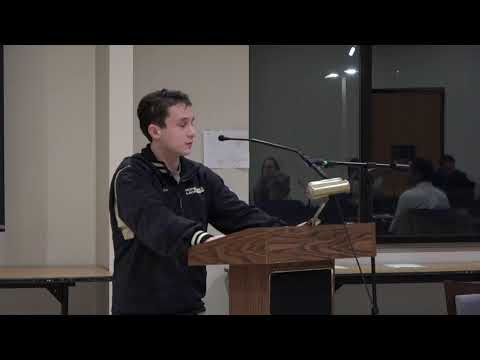
During public comment a student asked whether the apparent reduction in substance incidents reflected lower offending or a shift to detentions rather than suspensions; Ms. Rhett clarified SSDS figures include substance‑related incidents regardless of whether the disciplinary response was a detention or suspension and said detentions are not used for drug offenses under the student code of conduct.
Following the presentation, the board voted to accept the attached SSDS report. The chair called for a motion to accept the report; a second was given and the motion passed by voice vote. No formal roll‑call tally by name was recorded in the meeting transcript.
The board’s acceptance of the SSDS report concludes the district’s annual reporting cycle; administrators indicated they will continue to monitor the impact of newly implemented programs and return findings to the board as data become available.