Get Full Government Meeting Transcripts, Videos, & Alerts Forever!
Get email alerts on the Student Achievement topic
No spam. Unsubscribe anytime.
District presents assessment gains, gaps and $380,000 Filter First award
Summary
District staff reported strong K–4 gains and notable declines in math proficiency at higher grades while outlining interventions; administrators also said Caledonia received about $380,000 from a state Filter First grant to implement water‑filtering requirements.
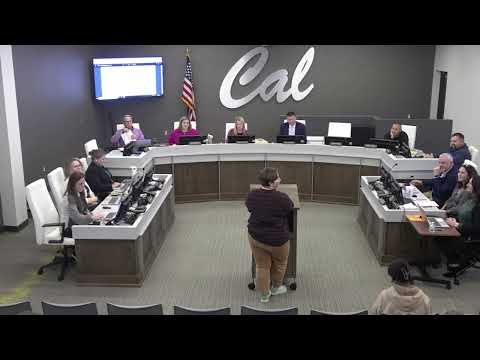
Dr. Diaz delivered an overview of district assessment results and next steps at the Dec. 16 Caledonia Community Schools Board meeting.
The presentation covered internal benchmarks (I Ready), state testing (M‑STEP) and college‑readiness screens (PSAT/SAT). Dr. Diaz highlighted strong growth in early grades — for example large improvements in K–4 placement and that many kindergarten students meet benchmarks — and said math proficiency declines at the secondary level remain an area of concern. She explained the district uses both typical growth and "stretch growth" metrics to track students below and above proficiency and showed comparative charts including ISD and state data.
To address gaps, Dr. Diaz said the district is aligning goals to the Michigan Continuous Improvement Plan (MICIP), strengthening Tier 1 instruction, expanding Tier 2/3 interventions, investing in professional learning communities and soliciting student voice to understand declines in PSAT/SAT math in upper grades.
Separately, the administration briefed the board on implementing Michigan's Filter First requirements. The district applied for available state grants and was awarded about $380,000 to fund filter purchases and labeling of potable water sources. The board was told the district ranks roughly fifth in awarded amounts in its region and that work will include labeling drinking sources and installing filters where required.
Board members asked about teacher feedback on I Ready and the presentation noted teacher responses are largely informal so far; Dr. Diaz said formal staff input on assessments is something the district will continue to collect as implementation proceeds.
What happens next: staff and school leaders will use winter benchmark data to form intervention groups ahead of spring M‑STEP testing and will develop monitoring and implementation timelines for the Filter First work.