Get Full Government Meeting Transcripts, Videos, & Alerts Forever!
Get email alerts on the Policy Student Devices topic
No spam. Unsubscribe anytime.
Board advances cell‑phone policy (JICJ) to second reading after debate over enforcement and safety
Summary
Trustees recommended Policy JICJ for a second reading and discussed enforcement, safety exceptions and whether noncompliance could risk state funding. Administrators said the district used state language verbatim and will finalize consistent enforcement procedures.
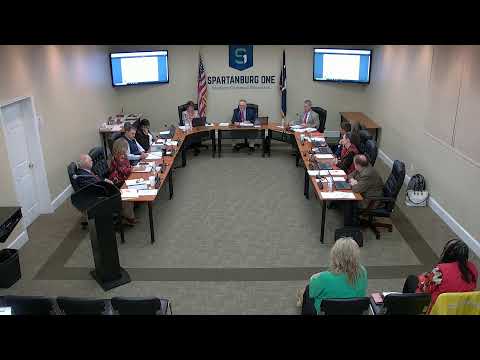
The Spartanburg School District 1 Board of Trustees heard a policy report on JICJ — possession and use of electronic communication devices — and moved the item forward for a second reading.
Policy presenter Miss Tesnier introduced JICJ and said there are no changes from the first reading and the administration recommends it for a second reading. The policy clarifies that students will be allowed to keep devices on their person but they are to be kept out of sight during instructional time. Tesnier told trustees the policy language was taken from state guidance.
Trustees and administrators debated specifics of implementation and enforcement. One trustee pressed whether devices must be turned off and whether the prohibition applies only during class time or all day; Tesnier and others clarified that the current practice prohibits device use during instructional time and that the proposed policy will be enforced at the school level with consistent consequences. A district official said enforcement details will be finalized in administrator and principal meetings planned for the coming days and that communications to families will follow.
Concerns about safety and parental contact were raised. A trustee noted parents sometimes need to contact students after a safety incident; administrators said phones remain on the student’s person so they can be used once the child is safe. Another trustee asked whether noncompliance with a state proviso could risk funding; a board member responded that it could, and administrators emphasized they are following the state proviso verbatim and will provide feedback to the state on implementation.
No formal vote on final adoption was recorded in the transcript; the item was moved for a second reading and trustees directed staff to finalize consistent enforcement procedures and communications.