Get Full Government Meeting Transcripts, Videos, & Alerts Forever!
Get email alerts on the Enrollment And Facilities topic
No spam. Unsubscribe anytime.
Superintendent warns of 25% 8th→9th cohort loss, outlines class-size adjustments and facilities concerns
Summary
Superintendent Dr. Riley reported six elementary class-size adjustments funded by efficiencies, said the district lost about 25% of the cohort between 8th and 9th grade this past year, and presented phase‑1 growth-task-force findings showing capacity risks in some Holden and Paxton schools; administration plans a phase‑2 facilities study and budget proposals for staffing and space.
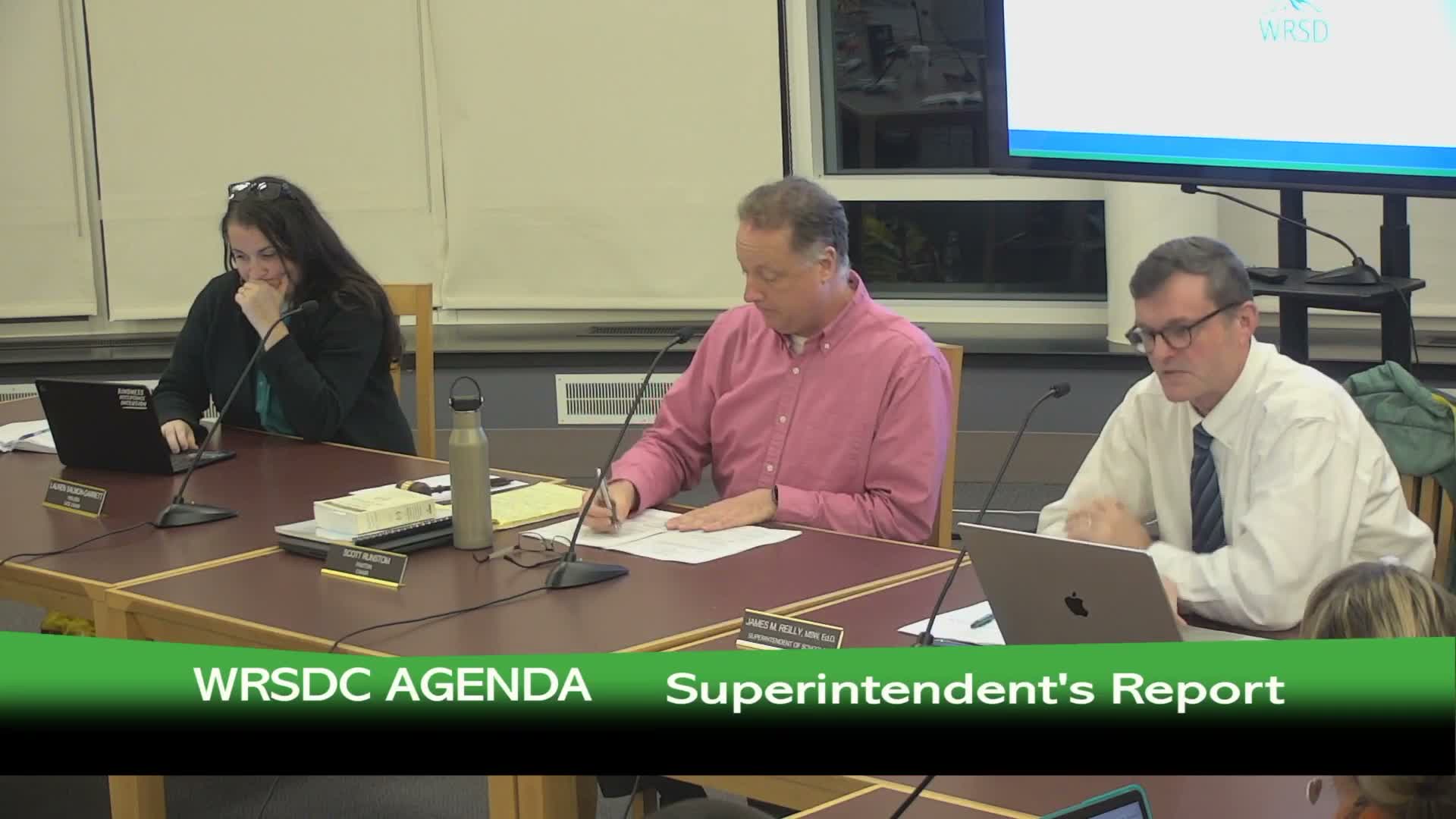
Superintendent Dr. Riley told the Wachusett Regional School Committee that the district has made six class-size adjustments at the elementary level this year that were not in the budget and were supported by district efficiencies. "We were able to support those 6 class sizes adjustments both by, in some cases, reducing the number of sections at elementary, but we also, did it by looking at other levels, specifically the high school," he said.
Riley flagged specific classroom pressures: "We would have had some classrooms at the elementary level that could have been approaching 27 students, 28 students," which exceeds committee targets in some grades. He described the district’s goal of equity across buildings and said targeted positions will be proposed in the budget to mitigate pressure points.
On enrollment, Riley said the high school is experiencing significant cohort loss between 8th and 9th grades. "We lost approximately 25% of that student population this past year," he said, calling it the largest drop in about 20 years and a priority for retention work.
The superintendent reviewed findings from the Town and Growth Facilities Task Force and the phase‑1 growth study by the Central Mass Regional Planning Commission, which project potential capacity stress in parts of Holden (several elementary schools) and at Paxton Center School. Riley said the district is pursuing a phase‑2 facilities study to inventory building capacity and will coordinate with towns on possible short‑term (modular classrooms) and long‑term (additions or new construction) responses. He also discussed in‑district school‑choice options and transportation tradeoffs as possible mitigations.
Committee members asked for further data and process clarity. Central office staff agreed to provide more granular slot‑utilization and scheduling data and indicated the district is seeking a grant via Central Mass to fund the phase‑2 work; administrators said they would know whether the grant is received by about January.
Why it matters: The combination of rising elementary enrollment in some towns and large cohort loss at the high‑school entry point affects staffing, instructional program planning, long‑term facilities investments and the budget.
Next steps: Administration will pursue a facilities phase‑2 study, provide a more detailed class‑size and scheduling breakdown, and present recommended budget requests tied to staffing and facilities needs.