Get Full Government Meeting Transcripts, Videos, & Alerts Forever!
Get email alerts on the Special Education topic
No spam. Unsubscribe anytime.
Parents and CPAC tell Wachusett school committee PRS data, transportation denials and communication gaps are denying students services
Summary
Parents and the district’s Special Education Parent Advisory Council (CPAC) told the Wachusett Regional School Committee that PRS complaint data, denied transportation and unfulfilled corrective actions point to systemic problems in special-education implementation and poor communication between families and administration.
Several parents and members of the Wachusett Regional School District’s Special Education Parent Advisory Council pressed the school committee on alleged lapses in special-education services and transparency during the committee’s regular meeting.
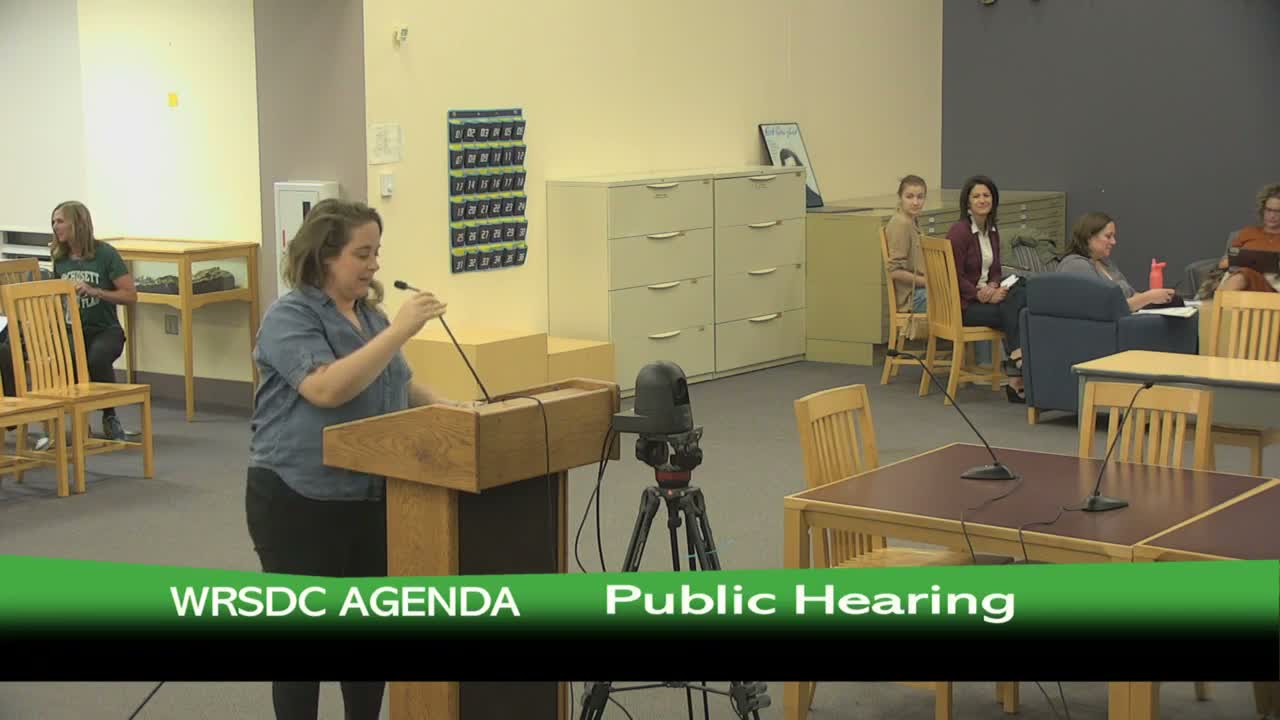
Angela Maher of Holden, whose son attends the Learning Center of the Deaf in Framingham, told the committee that her son’s individualized education program (IEP) requires extended-day services and transportation. She said the district ordered reimbursement for 39 round trips from December 2023 to May 2024 but that she has “never received” the money. “I am the reason my son received a free appropriate public education,” Maher said, describing repeated district denials of transportation that forced her to miss work and ultimately lose her job.
CPAC — the district’s Special Education Parent Advisory Council — reminded the committee that Massachusetts law (Chapter 71B of the Massachusetts General Laws) requires a CPAC and sets both advisory and participatory duties. A CPAC representative said CPAC has been left out of decisions that directly affect students with disabilities and urged the committee to create a formal process to allow CPAC to advise on policy and programs.
CPAC also flagged apparent discrepancies in the district’s presentation of PRS (problems reported to the state’s special-education review process) data. The group showed examples where the district reported fewer findings of noncompliance than CPAC’s review of letters of findings indicated and urged the committee to report the number of violations rather than counting only complaint cases. CPAC told the board it found cases where the district’s methodology produced lower counts than the letter of finding supports.
The advisory council emphasized the stakes of those designations. The CPAC presenter explained that when a finding relates to a denial of FAPE — a student’s right to a free and appropriate public education — the district may be required to provide compensatory services or reimburse families and that persistent noncompliance with IDEA (the federal Individuals with Disabilities Education Act) can jeopardize federal funding.
CPAC said publicly available data show a spike in PRS complaints during the 2023–24 school year. “When it’s broken down … 64% of complaints filed by families resulted in at least 1 finding of noncompliance by the district,” CPAC said, and urged the administration to produce the missing data CPAC needs for meaningful analysis: Office of Civil Rights referrals, descriptions of noncompliance (for example, transportation or independent educational evaluation denials), whether corrective action was required, whether third parties were involved, corrective-action deadlines, and dates of completion.
Committee members asked questions about whether CPAC and the administration had exchanged data in advance. A district representative said administrators had responded to CPAC earlier in the week and noted a methodological difference in how findings were tabulated (the district historically counted bolded findings of major violations, while CPAC counted each area of noncompliance in the letters of findings). Several school committee members acknowledged communication gaps and proposed a collaborative presentation that would include CPAC and administration.
Parents at the podium recounted everyday consequences they say stem from the failures: denied transportation, delayed evaluations, prior written notices that do not reflect meeting discussions, and a pattern of corrective-action plans past their deadlines. CPAC urged more timely communications so families do not feel forced to file formal complaints to get a response.
The committee did not take a formal vote related to CPAC’s requests at the meeting; members said they would follow up with administration about providing additional PRS data and exploring more formal ways to include CPAC in policy discussions. CPAC announced a general membership meeting scheduled for November 12 and said it would continue to press for measurable, transparent changes.
What’s next: committee liaisons said they would work with administration and CPAC to schedule joint presentations and to identify what specific PRS data can be made available at future meetings.