Get Full Government Meeting Transcripts, Videos, & Alerts Forever!
Get email alerts on the Sanctuary Resolution topic
No spam. Unsubscribe anytime.
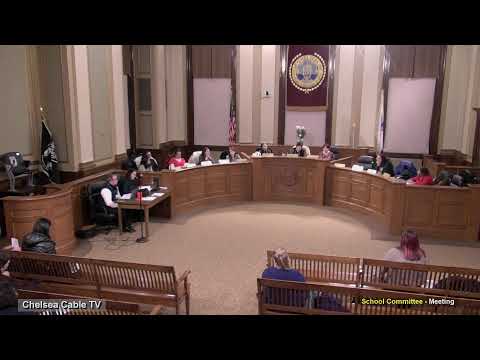
Chelsea school committee advances first reading of sanctuary‑district resolution, will convene committee review
Summary
On first reading the committee heard a resolution affirming Chelsea Public Schools as a sanctuary district and agreed to send the measure to a committee of the whole with legal counsel and outside perspectives before a second reading and vote.
The Chelsea School Committee on its final meeting of the calendar year advanced a first reading of a resolution that would formally declare Chelsea Public Schools a sanctuary district and pledged not to voluntarily cooperate with immigration enforcement, including sharing student or family immigration status with federal agents.
The resolution, read aloud by its sponsor, says in part, “Whereas the 2024 presidential contest led to the election of a candidate whose campaign promised to deport millions of immigrants... Whereas Chelsea Public Schools is a gateway school system that welcomes and educates all students,” and continues with commitments to protect students’ privacy and to decline voluntary cooperation with immigration enforcement except where a criminal warrant is provided (text read at the meeting).
Catherine Anderson, president of the Chelsea Teachers Union, told the committee she supported the resolution and urged an explicit district statement of protection, saying, “I think it's really important that at this time, Chelsea takes some time to really reaffirm our status as a sanctuary city, as a sanctuary school district,” and that reaffirmation can reduce student anxiety and protect families.
Committee members and public commenters recounted past local immigration raids and argued the formal statement would provide reassurance to immigrant and gender‑diverse students. The sponsor framed the measure as proactive preparation in case federal policy changes affect funding or enforcement: she warned that federal grant conditions could be used to pressure districts and that the district should be ready to seek state or philanthropic support if federal funds were conditioned or withdrawn.
Several committee members said they supported the intent but wanted to vet legal and political consequences before final action. One member asked for legal advice and suggested inviting outside experts on political implications; another asked staff to clarify district protocols for handling federal requests and to provide families and staff a clear statement of current protections.
Rather than vote on the resolution at the meeting, the committee agreed — by motion and second — to send it to a committee of the whole for an in‑person review that will include legal counsel and invited speakers before a second reading. The committee discussed scheduling the review as soon as possible, targeting time before the next regular meeting and noting the January budget and legislative calendar as relevant timing for state engagement.
The committee did not take a final vote on the resolution; the next procedural step is the committee of the whole review, after which a second reading and possible vote will be scheduled.