Get Full Government Meeting Transcripts, Videos, & Alerts Forever!
Get email alerts on the Opioid Abatement topic
No spam. Unsubscribe anytime.
Arkansas attorney general sets aside $1 million in opioid funds to pay for specialty-court housing, treatment and transport
Summary
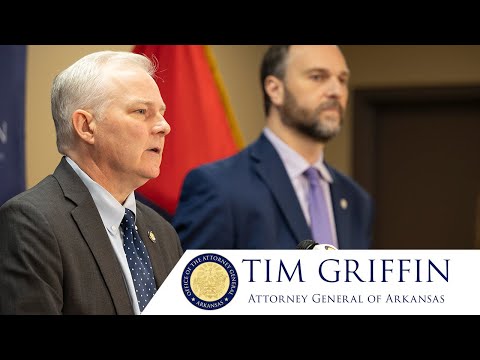
Attorney General Tim Griffin announced a $1 million opioid-abatement pilot to cover transitional recovery housing, treatment and recovery services, peer recovery support and transportation for specialty-court participants; judges will request case-by-case payments through the Administrative Office of the Courts.
Attorney General Tim Griffin announced a $1,000,000 pilot program using opioid-abatement settlement funds to pay for immediate, case-level needs for specialty-court participants, including transitional recovery housing, treatment and recovery services, peer recovery support and transportation.
Griffin said judges should route requests through Marty Sullivan and Kristen Clark at the Administrative Office of the Courts. "I'll set a $1,000,000 aside of opioid abatement funds," he said, adding the pilot is designed so payments "follow the individual." The office will collect data on demand and use to refine the program.
The pilot targets four categories Griffin and court staff identified as common and time-sensitive needs: transitional recovery housing; mental-health and substance-use treatment and recovery; peer recovery support services and community mentors; and transportation assistance to get participants to care. Griffin described the approach as narrow and immediate, not intended to cover routine operating expenses for courts.
Judge Settle, a Crawford County circuit judge who oversees a mental-health specialty docket, described the lack of immediate resources in many courts and called transitional housing and transportation "one of the most important needs" for stabilizing people after treatment. "Just that is gonna be so important for our program, and and for programs across the state," she said, adding that rapid placement into transitional housing can help someone find work and avoid relapse.
Marty Sullivan, director of the Administrative Office of the Courts, said Arkansas has "over a 100 specialty courts" and described practical gaps the pilot could fill, from juvenile participants lacking driver's licenses to veterans in remote counties without VA-accessible services. He said the pilot’s data could support pursuing additional federal dollars for veterans.
Griffin noted that opioid-settlement funds carry restrictions tied to an appendix in the settlement and must be used for opioid abatement-related purposes. He said the state recently settled a remaining defendant in the litigation, announcing a Kroger settlement of "approximately $13,000,000" to be paid over time.
The attorney general emphasized minimal bureaucracy: judges will send requests via email or phone to Kristen Clark, who will coordinate with Griffin’s office and the Administrative Office of the Courts to determine whether a particular request fits the pilot’s categories. The office will track metrics to see how money is used and how many people are served before deciding on expansions or adjustments.
Griffin and court leaders described the plan as a pilot phase; they will monitor use, collect data and then consider additional policy steps based on evidence from the program. The announcement comes at a briefing in Van Buren where court officials said rapid, targeted financial support can immediately connect specialty-court participants to treatment and reduce recidivism.