Get Full Government Meeting Transcripts, Videos, & Alerts Forever!
Get email alerts on the Archives Digitization topic
No spam. Unsubscribe anytime.
Arkansas attorney general pledges $1 million to digitize state constitutional papers with Oxford’s Quill Project
Summary
Attorney General announced a $1 million commitment to the University of Arkansas to digitize constitutional convention records and other primary documents and to integrate them with Oxford University’s Quill Project; university and archives leaders described holdings, technical approach and an initial 12-month target for early materials.
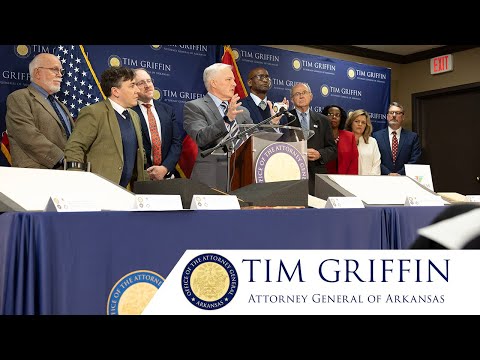
Attorney General Tim Griffin announced that he has set aside $1,000,000 to fund a University of Arkansas-led effort to digitize Arkansas’s constitutional convention materials and related primary sources and to link them to Oxford University’s Quill Project.
Griffin said the goal is to make historically important but hard-to-search materials—convention journals, correspondence, newspapers and manuscripts—readily searchable for lawyers, judges, scholars and the public. "If there is information about our constitution . . . we have not made it accessible, then we must correct that," he said.
Why it matters: Arkansas’s constitutions and supporting documents illuminate how drafters debated key phrases and structures that still shape state law. Griffin said his office sometimes needs archival research to draft opinions and that staff recently spent two weeks searching vaults for material that should have taken hours, a delay he linked to limited access and fragile storage conditions.
The partners and scope: The University of Arkansas will lead the effort through its library system, with Jason Battles, dean of libraries, serving as the campus point of contact. "We have manuscript collections, newspapers, proceedings and microfilm," Battles said, describing university capacity for digitization, descriptive metadata and handwriting recognition work. Dr. Nicholas Cole of Oxford—director of the Quill Project—said Quill interconnects constitutions, proceedings and contemporary newspapers so users can trace where phrases were debated and how proposals evolved.
Timing and technical approach: Dr. Cole said teams aim to have at least a state's first convention proceedings in Quill-format within about 12 months, with an ongoing program to work backward and forward through other conventions and amendments. The project will combine scanning, optical-character-recognition tuned for handwriting, descriptive cataloging and contextual linking so phrase searches return debates, committee reports and related newspaper coverage.
Funding and next steps: Griffin said the $1 million is set aside to start the work and that details of budgeting and longer-term hosting will be handled by the appropriate government bodies and the university. "This is the beginning," he said, adding that as material is digitized it will be integrated into the broader Quill database and copies of the data will be maintained in Arkansas as well as Oxford.
Voices from archives and scholarship: Dr. David Ware, state historian and director of the state archives, confirmed the archives hold the five engrossed copies of Arkansas constitutions and other supporting materials in a vault at the multi-agency complex, and emphasized the value of bringing the documents to a broader audience. Professor Brill, a former Arkansas Supreme Court justice, said access to drafters’ debates will help courts interpret ambiguous constitutional language. Dr. Rodney Harris and Dr. Harrison, scholars working on the 1874 constitution, said the project would accelerate academic research and public understanding of constitutional history.
What’s next: After this announcement the archivists will display sample materials for attendees; participants said the work will be rolling—some items could be available next year while the full corpus will take longer to compile and verify.