Get Full Government Meeting Transcripts, Videos, & Alerts Forever!
Get email alerts on the Superintendent Evaluation topic
No spam. Unsubscribe anytime.
Beaufort County board opens review of superintendent evaluation, flags limits of using test scores
Summary
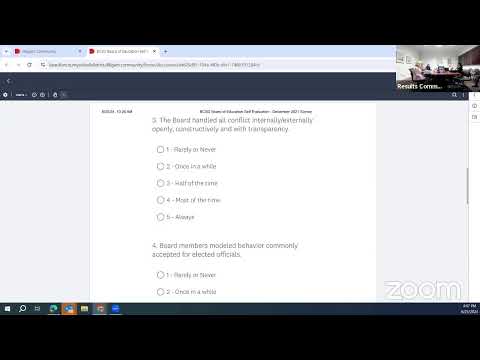
Board members agreed to a 30-day committee review of the superintendent evaluation tool after weeks of critique over subjective rubric language and whether student-test results should weigh heavily given changing state standards.
Beaufort County board members opened a formal review of the district's superintendent evaluation on June 25, debating how much weight to give measurable student-achievement metrics and who should set targets.
Board members said the current rubric—adopted about five years ago—relies in part on subjective language such as “ineffective” through “highly effective,” and several members urged clearer, numbers-based criteria. One member proposed that the superintendent himself set measurable goals that the board would then review and approve, arguing the board lacks the staff capacity to set technical targets this year.
Dr. Rodriguez, the superintendent, urged caution about tying the evaluation to current test scores: “The only individual in the system that is measured on student achievement, evaluated on student achievement, is the superintendent, the furthest individual from the classroom,” he said, adding that recent and forthcoming state changes to standards and accountability rules complicate using this year’s results as a fair measure. He said state adjustments to standards and assessments can depress scores during transition years, creating a misleading signal in a high-stakes evaluation.
Other members emphasized measurable fiscal and operational indicators, including financial oversight and bond-rating targets. One board member urged adding a metric capturing the district’s perfect subrecipient risk-assessment score from the Central Valley Department of Education over the last three years to reflect financial stewardship.
The board did not adopt immediate changes. Instead, members agreed to a near-term process: committee members and any interested board members will mark up the current evaluation blueprint within 30 days, reconvene at the end of July, and aim to present recommended changes by the end of August for the 2024–25 evaluation cycle. The chair said the plan was intended to give members time to propose concrete, measurable edits without rushing a decision.
The meeting opened with a procedural motion to approve the agenda; that motion was moved by "miss Hayes," seconded, and carried unanimously. The board adjourned by unanimous consent at the meeting's close.