Get Full Government Meeting Transcripts, Videos, & Alerts Forever!
Get email alerts on the Water Infrastructure topic
No spam. Unsubscribe anytime.
Marion County board approves ARPA-funded water tie and two EPA-funded wells
Summary
Marion County board voted to proceed with a 6-inch water tie-in and two east-side wells, using ARPA funds and an EPA emerging-contaminants grant; engineers will verify pressure and bids will determine final scope and cost.
Marion County — The Marion County board voted to move forward with a scaled plan to extend water service and to accept federally funded wells after finding an earlier 8-inch tie-in option infeasible.
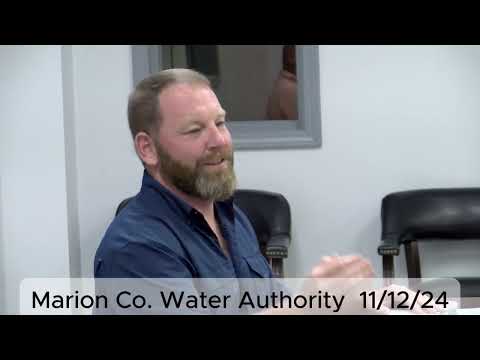
Speaker 3 (Unidentified Speaker) told the board the originally proposed 8-inch line tying into ADM and Franklin County proved too costly and technically challenging, and recommended using American Rescue Plan Act (ARPA) funds to build a 6-inch tie-in with a local main and to complete two east-side loop projects. Speaker 3 said the combined work would add roughly 115 households to the system and would use most of the authority’s available funds.
The board also approved drilling two wells on the county’s east side that Speaker 3 said would be fully funded by the EPA emerging contaminants program with "100% funding" and no local match; the county would be responsible for ongoing maintenance and operations. "They told us if that didn't work, then we could look at trying to do a tie in with Hainesville to get more water on that side of the county," Speaker 3 added.
Why it matters: the vote aims to expand service to areas officials said could not get water any other way while attempting to avoid new debt. Speaker 3 emphasized the approach is a compromise driven by limited funds, and cautioned that final costs will depend on competitive bids and engineering checks.
Details and next steps
- Scope: The board discussed a 6-inch tie-in, two east-side loop projects (one near Highway 233 and 118 estimated to serve about 46 households; another near Highway 30 and 233 estimated at about 17 households) and a tie-in that Speaker 3 estimated would bring the total new customers to roughly 115. These figures were described in the meeting as approximate.
- Funding: Speakers discussed using ARPA funds as the primary local funding source. On the record, participants gave varying, partly inconsistent dollar figures when discussing total project costs and county contributions; the board stated the plan would "use every bit of the money we have available." The EPA emerging contaminants grant was described as covering two wells at 100% with no local match required.
- Engineering and procurement: Board members said engineers will measure static pressure and flow at key points to determine whether gravity flow will suffice or whether a pump station will be required. Two candidate pump‑station locations were discussed (Highway 138 and a site at the bottom of the hill by '13'). Speakers repeatedly warned that bids may come in over budget and the board would have to scale projects if necessary.
- Fees and previous work: Speaker 3 said earlier engineering invoices would largely be covered by grant funds tied to the new project, with a modest out-of-pocket estimate (Speaker 3 gave a working estimate of under $50,000) for rework on smaller items.
Votes and formal actions
- Motion to proceed with the designer/project and run the 6-inch line from the Franklin County line into the Harker Bridal area: passed after an in‑favor call; motion seconded on the record.
- Motion to proceed with two east-side wells (EPA-funded): passed after an in‑favor call; motion seconded on the record.
- Motion to designate the regional engineering firm that had previously done much of the work: moved and seconded; board indicated approval to proceed.
Quotations
"We're gonna be able to do this without any debt," Speaker 3 said, describing the board's goal of completing the work without taking on new borrowing. "They told us if that didn't work, then we could look at trying to do a tie in with Hainesville to get more water on that side of the county," Speaker 3 said about contingency options tied to the EPA well effort.
Context and caveats
Board members and staff repeatedly warned that the project remains subject to engineers' pressure and flow checks and to competitive bidding. If bids exceed the budget, the board said it will revisit priorities and scope. Several figures discussed in the meeting were approximations; where dollar amounts or precise financial breakdowns were unclear on the record, the article notes those items as not specified.
The board set follow-up work including site visits and engineering checks; the next regular meeting was confirmed for Dec. 10 at 6:30 p.m., and the board adjourned following the votes.