Get Full Government Meeting Transcripts, Videos, & Alerts Forever!
Get email alerts on the Wastewater Treatment topic
No spam. Unsubscribe anytime.
Orange County panel hears design and financing update for Harriman wastewater plant, $156 million estimate
Summary
Consultants told the Orange County Sewer District advisory committee on Dec. 10 that the Harriman wastewater treatment plant upgrade is estimated at $156 million, outlined required permits and surveys, and urged quick action on intermunicipal agreements and a bond resolution to meet SRF-related funding deadlines.
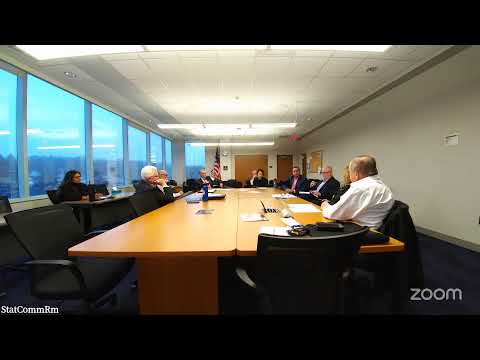
Orange County’s Sewer District advisory committee received a design-phase briefing Dec. 10 on the proposed Harriman wastewater treatment-plant upgrade and the financing steps needed to move the project toward construction.
Consultant Marybeth, of Delaware Engineering, told the committee the upgrade would take the plant from its current 6 MGD permit toward a 9 MGD permit and requires multiple regulatory filings, including a variance for total dissolved solids and chlorides, an Army Corps of Engineers permit for the outfall, a general construction stormwater permit and a notice of anticipated noncompliance for taking unit processes offline during construction. "We are on track for an application in February," Marybeth said, and the team scheduled a DEC pre-application meeting for Dec. 19 to clarify submission expectations and to request a technical working group.
Why it matters: the project team said the treatment-plant upgrade is listed at $156,000,000 for the plant alone and is already on the state financing list that enables an application to the Clean Water State Revolving Fund (CWSRF) administered by the Environmental Facilities Corporation (EFC). That placement opens eligibility for low-cost financing and several grant programs, but the team warned the committee it must complete legal proceedings, intermunicipal agreements (IMAs) and a bond-resolution process in time to obtain funding commitments by May 30, 2025.
The consultant walked the committee through design and permitting work under way: filter selection to meet a phosphorus limit, plant water-system design, an upgraded outfall and hydraulics, on-site power and transformer capacity, equipment selection, and site layout and sequencing to keep construction safe. Survey work including ground-penetrating radar began the week of Thanksgiving and wetlands delineation of areas near the Ramapo River was completed in September; an asbestos and lead survey RFP for structures slated for demolition has been issued and geotechnical work is in final RFP form.
On financing, Marybeth outlined the principal funding routes: CWSRF loans and grants via EFC, the state Water Infrastructure Improvement Act (WIA) (projects could qualify for grants up to about $25 million), DEC's Water Quality Improvement Program (WQIP) (typically up to about $10 million for projects addressing impaired waters), a new Empire State Development county infrastructure grant program (statewide $50 million, county may submit one application for award sizes roughly $500,000–$1,000,000) and federal BUILD/Bipartisan Infrastructure Law funding. "The state and federal programs layer together," Marybeth said, "but the May 30 commitment window is the deadline to get into the FY2025 pipeline."
Committee members discussed the need for IMAs if the project’s debt repayment relies on out‑of‑district customers; Marybeth said EFC expects documentation that revenue sources will be available for the term of borrowing (typically 30 years). She explained the County Law 5‑a proceeding: the county must prepare a map, plan and report (including project cost and the typical user charge), hold a public hearing, make findings of public benefit, and then refer the project to the Office of the State Comptroller for procedural review before adopting a bond resolution.
Speakers also debated whether the county should hire an external fiscal adviser or rely on bond counsel for amortization schedules and affordability analyses. One committee member urged using an experienced fiscal adviser given the size of the project and EFC’s expectations about rate impacts: "They want to see when the O&M charge grows from about $500 per unit to future levels," the member said.
On capacity allocation, the group discussed the district’s roughly 3,000,000 gallons of capacity and how much of that should be reserved for in‑district use versus made available to out‑of‑district communities. A consultant noted that after a 2006 bond, only the town of Woodbury signed an IMA to buy extra capacity; others declined.
Next steps recorded during the meeting included scheduling a meeting with county staff (Carrie Gallagher was contacted during the meeting), advancing the map/plan/report work, preparing EFC materials and business‑plan elements, resolving IMA questions with partner communities, and moving toward adopting a bond resolution and County Law 5‑a proceeding so the project can meet the SRF/grant commitment timeline. The committee agreed to begin monthly meetings in January to maintain momentum.
The meeting closed after a call for a motion to adjourn and seasonal greetings.