Get Full Government Meeting Transcripts, Videos, & Alerts Forever!
Get email alerts on the Municipal Budgeting topic
No spam. Unsubscribe anytime.
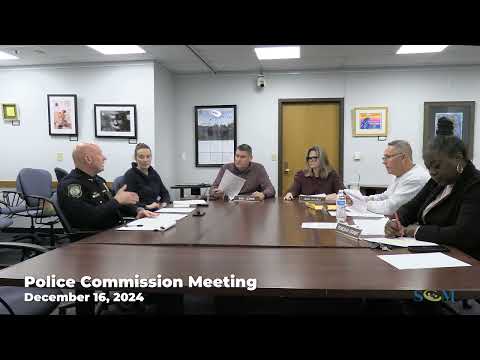
Simsbury commission approves FY26 police, dispatch, animal control and emergency preparedness budgets amid staffing and overtime concerns
Summary
The Simsbury Police Commission voted to adopt four FY26 operating budgets after discussing a 7% increase in the police budget driven by salary costs, a roughly 30% rise in overtime, a pending grant for dispatch software, and plans to purchase three new cruisers.
The Simsbury Police Commission approved proposed fiscal year 2026 operating budgets covering the police department, dispatch, animal control and civil preparedness after a discussion of staffing, overtime and technology costs.
The presenter, identified only in the transcript as Speaker 8, told the commission that "the whole police budget shows a 7% increase" and that full‑time salaries were the primary driver, citing "303,000, $304,000" in related costs. Speaker 8 also flagged overtime and an added contractual holiday (moving from 11 to 12) as contributors to the increase.
Why it matters: the commission was asked to approve budgets while the town's board of finance signaled constrained fiscal parameters, including a shrinking grand list that will require spending restraint across town boards. Speaker 6 summarized the broader context, saying the board of finance had asked boards to "cut their budgets" because there is "very little money" available.
Members pressed the department on specific lines. Speaker 10 questioned a roughly 30% increase in the overtime line; Speaker 8 said contract changes (moving to a sick‑bank structure) and the planned addition of officers should reduce overtime pressure over time. "They're moving to a sick bank structure," Speaker 8 said, adding the change will limit unlimited sick leave and help address long‑term staffing costs.
Commissioners also discussed capital and equipment items. Speaker 8 confirmed three cruisers are planned and that vehicle purchases are shown in operating for presentation before being moved to the capital nonrecurring (CNR) fund for payment. Technical trials in two cruisers — an intersection‑crash alert and improved officer location mapping — are being piloted at an estimated cost of about $360 per car per year.
On dispatch technology, Speaker 8 said the department applied for a congressional directed spending grant to buy a call‑handling product (estimated $65,000–$70,000) while an annual warranty/service/licensing cost is projected at roughly $10,000; the presenter said the award appears to have been granted but formal documentation was not yet provided.
A motion to approve the FY26 budgets for police, dispatch, animal control and civil preparedness was made by Speaker 6 and seconded by Speaker 9; the commission approved the motion by voice vote after those present responded "Aye." The meeting adjourned shortly afterward.
The transcript records recognitions and routine business earlier in the meeting, including correspondence noting a U.S. Homeland Security letter of accommodation for Detective Devon and Sergeant May and thanks from the Simsbury Cemetery Association to Lieutenant Samselski for event parking support. Those items were accepted as part of the meeting's correspondence packet.
What’s next: the budgets were approved at the meeting; the record shows the commission will manage capital purchases through the CNR fund and may return to the board for supplemental requests (for example, promotional testing) if additional funds are needed.