Get Full Government Meeting Transcripts, Videos, & Alerts Forever!
Get email alerts on the Land Use Cannabis topic
No spam. Unsubscribe anytime.
Commission denies special permit for cannabis cultivation at 139 Norwich Avenue after residents raise odor, land‑use and flood concerns
Summary
After public comment and staff input, the Norwich Planning Commission voted 3–1 on Dec. 17 to deny a special permit for a proposed cannabis cultivation and manufacturing facility at 139 Norwich Avenue, citing inconsistency with the city’s plan and neighborhood impacts including odor and industrial scale.
The Norwich Planning Commission voted Dec. 17 to deny a special permit for a proposed cannabis cultivation and processing facility at 139 Norwich Avenue, a 10.5-acre former driving-range site. The motion to deny passed by voice vote recorded in the minutes as 3–1.
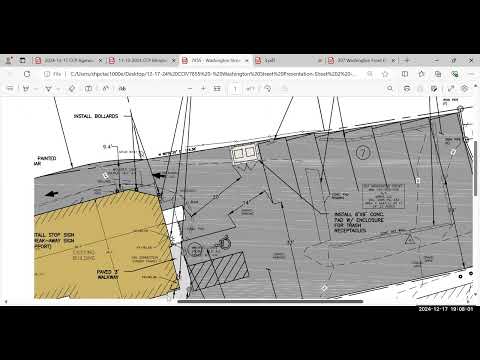
Applicant representatives with CLA Engineers and Let's Grow Hartford LLC presented a plan for a 6,650-square-foot raised steel building and a 25,000-square-foot fenced outdoor cultivation area. Presenters said the facility would be raised roughly 10 feet above grade because the site is in a floodplain, would include a water-quality pond and forebay to treat runoff, and would rely on above-ground growing with crushed stone surfacing in the grow area. Security proposals included a 12-foot chain‑link fence with privacy slats and 24/7 video surveillance. Applicants said they planned to operate weekdays from 8 a.m. to 6 p.m. with a small weekend crew during peak season and to use drip fertigation and low‑risk pesticides; they told the commission the state’s Cannabis regulatory agency (Department of Consumer Protection) will oversee licensing and enforce track‑and‑trace disposal requirements.
Residents spoke at length in opposition. Tina Pacheco of Scotland Road urged denial, saying the proposal would replace one of the town’s few remaining recreational spaces, Nippy’s driving range, change the character of a densely developed neighborhood, and risk traffic, odor and industrial activity next to homes and small businesses. Several residents asked how the facility would manage irrigation, flooding and waste, and whether odors from outdoor cultivation could be controlled; applicant representatives said they plan to use activated carbon filtration for drying operations and would investigate filtration or high‑tunnel structures to reduce outdoor odors but acknowledged they could not guarantee there would be no residual odor from an outdoor grow.
Staff raised procedural and technical requirements: enforcement staff and the city engineer noted that a free split plan may need to be filed with land records prior to mylar submission and that several flood‑hazard technical details (architectural or engineering floodproofing certifications) must be provided before final recording. The applicant said it would provide the required floodproofing and mechanical elevation details before filing mylars.
Following public comment and staff remarks, a commissioner moved to deny the special permit citing inconsistency with Norwich’s plan of conservation and development, concern that odor could adversely affect a nearby bakery and other small businesses, and that the proposed industrial building and a tall fence are incompatible with the neighborhood character. The motion was seconded and carried 3–1. The record does not show a formal vote-by-name in the transcript; the minutes record the outcome and that the motion carried. The commission closed the public hearing and adjourned the meeting at 8:11 p.m.