Get Full Government Meeting Transcripts, Videos, & Alerts Forever!
Get email alerts on the Land Acquisition topic
No spam. Unsubscribe anytime.
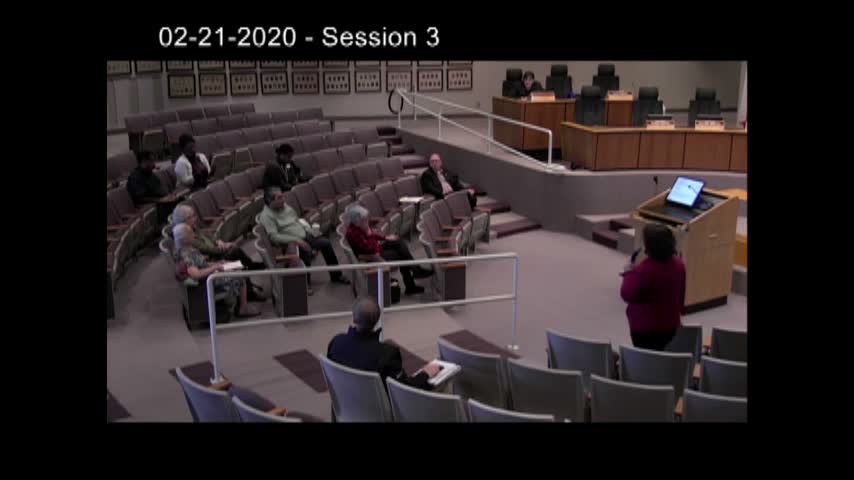
Residents press Irving officials on vacant lots and land-trusts as way to secure affordable housing
Summary
At a City of Irving meeting residents urged use of city parcels and community land trusts to expand affordable housing, raised code-lien obstacles to acquiring vacant lots, and questioned the concentration of affordable units in lower-market neighborhoods.
Residents at a City of Irving public session pointed to specific parcels, foreclosure liens and neighborhood concerns while consultants and staff described legal and practical limits on city acquisition and tools to preserve long-term affordability.
A resident (Speaker 3) described a vacant lot left after a condemned house where code and tax liens — "over $15,000," the participant said — have blocked reuse. Presenters explained the city can pursue code or tax-foreclosure but noted costs and timelines (often about two years for some lien processes) and that without a land bank the city is not guaranteed to obtain property at auction because private bidders can outbid judgment amounts.
Community land trusts (CLTs) drew particular interest. A presenter explained CLTs typically have a 99-year ground lease during which the nonprofit owns the land and the homeowner buys only the structure; resale formulas cap homeowner appreciation to keep homes affordable for subsequent buyers. "When you remove that land cost away from the family's monthly mortgage, that's one way of reducing the amount they have to pay," the presenter said.
Residents also expressed concern about spatial concentration of affordable housing. One attendee described "pseudo-redlining," arguing that market forces would concentrate affordable projects in South Irving and leave North Irving with few affordable options. Presenter remarks stressed that programmatic assistance is financial and must comply with fair-housing laws; presenters recommended mixed-income projects and targeted prescriptions (for example, setting aside a minimum share of affordable units on city-owned parcels near stronger markets) as ways to avoid concentrated patterns.
Participants asked about assisted-living and independent-living choices for seniors and whether Medicaid expansion affects operating subsidies. Presenters said Texas's lack of an expanded Medicaid program limits the ability to use Medicaid waivers to subsidize operating costs; those projects in Texas typically rely on market-based demand unless state policy changes.
City staff said they will compile written input and return with proposals in subsequent sessions. No property acquisitions, land-bank creation, or formal policy votes were taken at the meeting.