Get Full Government Meeting Transcripts, Videos, & Alerts Forever!
Get email alerts on the Housing Policy Options topic
No spam. Unsubscribe anytime.
Residents weigh options: federal funding rules, inclusionary limits in Texas, tiny homes and ADUs
Summary
At the community meeting, staff and consultants discussed policy tools — CDBG/HOME eligibility requirements, limits on requiring affordable units through zoning in Texas, tiny‑home feasibility, accessory dwelling units and preservation — and invited public input for the housing strategy.
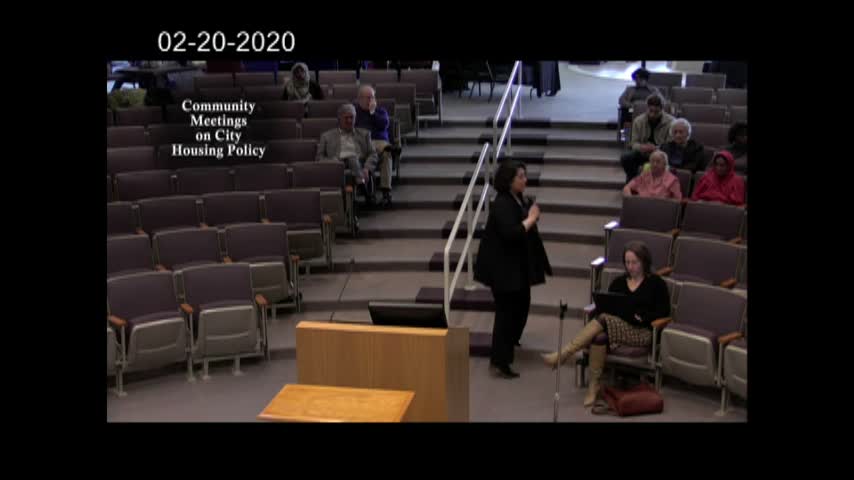
During the public Q&A, residents asked whether the city can require affordable units as part of new development and where subsidy dollars would come from. Raquel Favela said Texas law limits requiring affordable units through zoning; she said mandatory inclusionary requirements typically apply only when the city provides funding or incentives.
Steve Reed, identified as director of Planning and Community Development, clarified federal program rules: "If a housing development is partially financed with CDBG or HOME funding, there is a requirement that a certain number of units have to be affordable," and he said non‑subsidized market developments do not carry the same legal requirements.
Community members raised options and concerns including tiny‑home communities, accessory dwelling units (ADUs), cluster housing (duplexes, triplexes, fourplexes), and mixed‑use live‑work units. Favela said tiny‑home projects are feasible in some markets but face lender and appraisal hurdles and often require public or philanthropic financing; she noted some Texas examples used public funds and were placed where impacts on adjacent property values were limited.
Participants also asked about preservation and rehabilitation of existing housing stock as a cost‑effective production strategy. Favela said rehab and preservation are part of the production target and can help maintain units without the full cost of replacement.
The session closed with staff reminding attendees of future meeting times and asking residents to submit further comments by email.