Get Full Government Meeting Transcripts, Videos, & Alerts Forever!
Get email alerts on the Public Art Fire Station topic
No spam. Unsubscribe anytime.
Ann Arbor fire chief seeks public‑art input for new net‑zero Fire Station 4
Summary
Fire Chief Mike Kennedy briefed the Public Art Commission on plans to replace Fire Station 4 at Huron Parkway and Platt, reported bids ranging roughly $9M–$10.7M, flagged the station’s net‑zero goal, and asked the commission to advise on a public‑art call (city staff to draft an RFQ in January).
Mike Kennedy, Ann Arbor’s fire chief, told the city’s Public Art Commission on Dec. 18 that bids returned this week for the replacement of Fire Station 4 ranged from about $9,000,000 to $10,700,000 and are within the project’s primary budget. "The highest bid was 10,700,000, the low bid was 9,000,000," Kennedy said, adding that a review panel will evaluate proposals under the city’s best‑value procurement process.
Kennedy described the new station — to replace a 1960s building at the Huron Parkway and Platt intersection — as designed to meet modern operational and equity needs, including gender‑inclusive facilities. He said the project aims to achieve a net‑zero energy standard: "This will be the 1st net 0 fire station in the state of Michigan," he said, while acknowledging the claim depends on timing and funding.
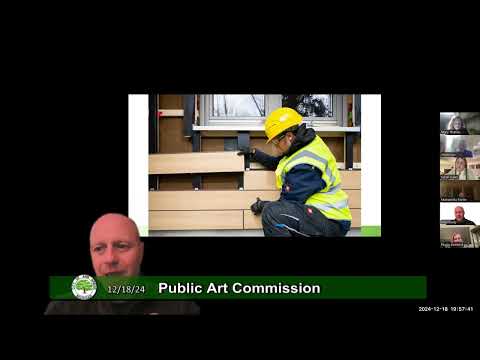
The chief identified a prominent exterior wall facing Huron Parkway as the primary public‑art opportunity. He described the finished exterior as a synthetic, wood‑looking cladding over cement block and said anchors could be run through the surface to accommodate mounted work. Kennedy emphasized the building design has already been bid, so artists likely will provide site‑specific proposals that respect the existing surface or propose attachable panels rather than changes to core building construction.
On schedule, Kennedy said staff will grade proposals in January, interview shortlisted contractors in late January and February, aim to identify a vendor by the end of February and begin contract negotiations in March before taking results to council in April. The architect is forecasting approximately an 18‑month build. Kennedy cautioned that, because of land availability, a temporary service gap is likely during construction.
Commission members discussed how much to allocate for public art. Commissioners noted a common municipal practice of setting aside about 1% of a capital project for art; one participant said that tends to be a minimum and that sculpture and installation costs can push budgets higher. Kennedy gave an example of how the art cost could be added to the bond amount and asked whether the group would be comfortable anchoring artist expectations at roughly $100,000 on a $10 million project.
Commissioners also raised maintenance questions: who will maintain murals or sculptures over time and whether the fire department can commit limited general‑fund dollars to upkeep. Kennedy said ongoing maintenance commitments would be challenging for the department and recommended specifying materials or using replaceable panels to limit future costs.
On selection method, commissioners generally favored a staged process: an RFQ (qualifications first) to shortlist artists followed by a paid design phase for finalists, and then an opportunity for public feedback on top designs. Kennedy said his staff intends to draft a call for qualifications by the end of January and, if possible, release it in early February. Commissioners agreed to form a small review team to work with department staff on the RFQ; staff will circulate meeting dates and the draft RFQ for commission input.
What’s next: city staff will draft the RFQ/RFQ language and timelines in January, commission volunteers and staff will finalize review roles, and the commission will continue discussion at its next meeting in January. The commission also agreed to consult city bylaws and the city attorney for conflict‑of‑interest questions before formal selection work proceeds.
Reporting note: quotes and procurement numbers are taken from Chief Mike Kennedy’s presentation to the Public Art Commission on Dec. 18.