Get Full Government Meeting Transcripts, Videos, & Alerts Forever!
Get email alerts on the Sidewalks topic
No spam. Unsubscribe anytime.
Ann Arbor approves $150,000 sidewalk snow-removal contract as neighbors press to protect Brockman trees
Summary
Council approved a $150,000 contract for sidewalk and pedestrian-island snow removal and heard extensive public comment urging the city to pair sidewalk-gap projects with traffic calming and tree preservation on Brockman Boulevard.
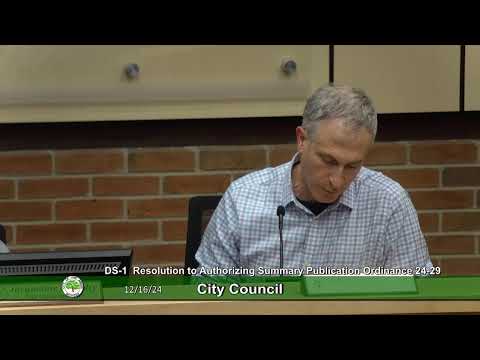
The Ann Arbor City Council on Dec. 16 approved a general services contract with Target Facility Management LLC, not to exceed $150,000, to provide snow removal for city-maintained sidewalks and 136 pedestrian islands (approximately 13.2 miles of coverage). The action, part of the consent agenda after discussion, followed hours of public comment urging a broader approach to sidewalks, safety and tree preservation.
Residents and active-transportation advocates urged the council to treat sidewalks as essential transportation infrastructure and to expand snow-removal coverage beyond the limited parcels in the contract. "It's time to treat this with the urgency it deserves," said Molly Kleinman, a Ward 4 resident who pointed to two serious injuries on Packard in the prior week as evidence that pedestrian infrastructure needs faster action. Adam Jaskiewicz, also a Ward 4 resident, urged proactive enforcement of the city's sidewalk ordinance — recommending post-storm inspections on priority routes and issuance of notices or citations rather than relying solely on complaint-driven enforcement.
Staff said the contractor was chosen to clear islands and DDA sidewalks and that the $150,000 estimate is based on expected number of events; staff also said the contractor could perform additional removal on public sidewalks if asked, but that extra work would draw from the same $150,000 allocation. "The work that they would be able to do is dependent really on the number of times that we request their service," said Paul Matthews (staff), describing the scope and staffing limits.
Several dozen Brockman Boulevard residents urged the city to preserve mature trees while installing sidewalks. Neighbors proposed placing sidewalks street-side (toward the roadway) to spare critical tree root zones and to achieve traffic calming by narrowing the roadway. "We're asking for the sidewalks to... out into the street a little bit," said Karen Schulte, explaining that street-side sidewalks could both protect trees and slow traffic. Speakers representing the Save Ann Arbor Trees Coalition emphasized cross-department coordination among engineering, forestry and traffic-calming teams.
Council members and staff acknowledged the trade-offs. Council Member Adena said staff would continue to work with residents and engineers; staff noted the next public information session is anticipated in early 2025 and that project construction would be earliest in calendar year 2026. Several council members also raised accessibility concerns, urging staff to consider older adults and people with disabilities when designing programs or enforcement options.
The council's discussion highlighted capacity limits for city-led clearing under the current ordinance: staff said the city lacks the people power to replace property-owner responsibilities at scale without ordinance and operational changes. Members discussed options — including contracting authority to perform work and billing property owners under existing code — and suggested staff return with implementation details and options for serving residents with mobility challenges.
The council approved the contract as proposed. Next steps noted by council and staff include further public engagement on sidewalk-gap projects, ongoing coordination on Brockman design options to save trees while adding sidewalks, and exploring whether the current contract scope or future procurement could help meet demonstrated accessibility needs.
Ending: The council approved the sidewalk snow-removal contract as part of the consent agenda; staff will continue outreach on sidewalk-gap projects and return with implementation details on enforcement and accessibility accommodations.