Get Full Government Meeting Transcripts, Videos, & Alerts Forever!
Get email alerts on the Public Comment topic
No spam. Unsubscribe anytime.
Residents, students and fair stakeholders urge council to slow downtown dirt-lot development, cite parking and county coordination concerns
Summary
Multiple public commenters told the Caldwell City Council they oppose development on the downtown dirt lot, citing loss of event parking, lack of coordination with Canyon County, and concerns about developer claims and tax impacts; a petition from College of Idaho students was submitted during public comment.
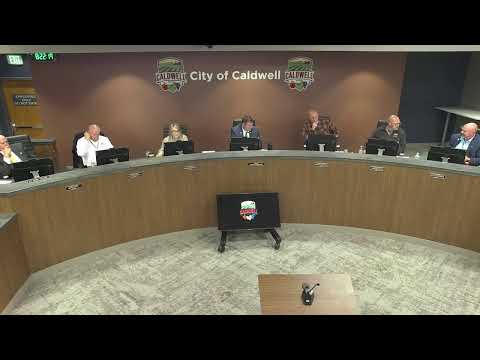
Speakers during the Dec. 16 public-comment period pressed the Caldwell City Council to reconsider rapidly advancing development plans on a city-adjacent dirt lot that is widely used for event parking and community activities.
Jean Craigbring told council she was embarrassed by the city— pproach to the dirt-lot matter and said the county—commissioners' concerns were sidelined. "The letter of intent was approved. No. The letter of intent was approved. Your legal counsel clearly stated that approving the letter of intent was nonbinding," she said, noting that project details have not been approved. Craigbring urged more coordination with Canyon County and criticized perceived dismissiveness toward stakeholders.
Sue Cushlin said the dirt lot, when marked, contains about 295 parking stalls and is used heavily during the Canyon County Fair and other events; she argued the developer—s proposal (she summarized it as offering roughly 120 stalls) would not replace that capacity. "The measly 120 stalls presented by the developer doesn't mitigate the parking concerns for the city to use," she said, urging the council to consider safety, taxes and communication before approving the project.
A College of Idaho student (Ariel) submitted a petition with 232 signatures she said represented 21% of the college community and said students want their voices heard on the decision. Other commenters linked the development debate to broader community issues: one speaker tied city decisions to school levies and 4-H impacts.
Mayor and council responded to the comments by reminding speakers of the three-minute rule and offering staff follow-up opportunities; mayor also clarified that a letter of intent is nonbinding and that questions about developer specifics will be part of the urban renewal agency—s RFP process. Several councilors acknowledged community frustration and urged respectful engagement while defending the council's work.
What remains unresolved: public commenters asked for independent verification of parking counts and expressed skepticism about property-ownership proposals presented during developer briefings. Staff said the urban renewal agency will determine RFP scope (including whether parking must be included) and that the agency cannot force privately owned parcels to participate. Council indicated it will continue discussions with the agency and staff; no final development agreement was approved at the meeting.