Get Full Government Meeting Transcripts, Videos, & Alerts Forever!
Get email alerts on the Municipal Procurement topic
No spam. Unsubscribe anytime.
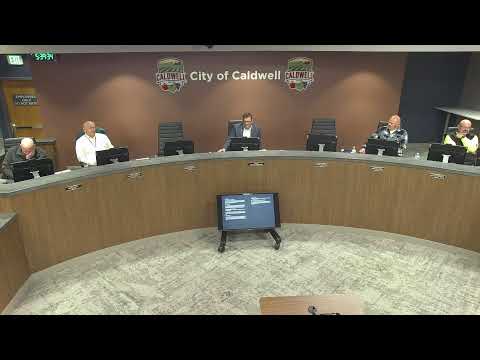
Caldwell workshop reviews procurement rules after large pool change orders
Summary
Caldwell city staff and councilors reviewed procurement policy thresholds, permissible contract modifications and contract delivery methods after large change-order costs on a recent pool project; staff said many costs stemmed from unforeseen site conditions and design omissions.
Caldwell held a workshop focused on city procurement rules and contract modification practices after councilors raised concerns about large change-order costs linked to the city's recent pool project.
The meeting opened at 5 p.m. with the mayor saying the workshop's purpose was to "discuss the process and procedures of departmental contracts as outlined in the city procurement policy and by Idaho State statute." The mayor characterized the pool matter as "a change of scope rather than a change order because it was additional things," and asked staff when and how such modifications are allowed.
Raelyn, who summarized the city's purchasing policy, told councilors the policy gives appointed officials authority to execute contract modifications within policy limits and requires council review for items over $50,000 or for unbudgeted expenditures. "The city policy is if it's budgeted, then over 50,000 comes to city council or if it's unbudgeted, then anything comes before city council," she said, and noted the policy and procurement-standard language calls for cost or price analysis on actions at or above that threshold.
Rob, a city staff member who described the pool and bathhouse sequence, said the bathhouse work was proposed while the pool project was already underway and staff chose to continue with the on-site contractor, Benetton Construction, to avoid additional mobilization costs. Rob said some items were correctly labelled as change orders while others were changes in scope; he described the decision as intended to save cost and time. "They have defended every change order, and we've sat there and talked through every single one," Rob said, adding that some extra costs were driven by existing underground utilities and other unknowns when working on an existing facility.
Councilors pushed on whether the city could have avoided later overruns. Councilor Doty said residents mainly hear about overages and asked how to prevent repeat occurrences. Council members noted small omitted items'for example, lighting or ADA railings'can compound into large additional costs. Rob acknowledged some omissions were design issues and gave the example that lights were not listed in the original bid documents, which made them a change order rather than part of the base bid.
Mark, the presenter who walked through delivery methods and statutory limits, told the council there are few statutory mandates about how to allocate risk or handle change orders; statutes do, however, require certain contract provisions and performance/payment bonds. Using a separate example, Mark said a $36,000,000 wastewater project in Lewiston illustrated how differing site conditions can drive lengthy negotiations about who pays for unknown subsurface conditions and that shifting all such risk to contractors raises prices.
The presenters reviewed common delivery methods and trade-offs for public works: design-bid-build (traditional low-bid process), construction-manager-as-agent/at-risk and guaranteed-maximum-price approaches (which set a not-to-exceed/GMP and can return savings), and design-build (a single contract for both design and construction). Mark explained that each method allocates risk differently and that prequalification or qualifications-based selection can be used when the city does not want to select strictly on lowest bid.
Councilor Lindbergh asked whether the city includes price-adjustment clauses for volatile materials; staff said most city contracts are fixed-price for short-duration projects and that long-term projects by larger agencies more commonly include adjustment mechanisms. Kelsey (Council Register) asked if the city is required to take the lowest bid; Mark said that under traditional design-bid-build the low bidder typically wins but noted prequalification and qualifications-based selection are available alternatives.
On subcontractor protection, Mark said statutory payment bonds are required on public works contracts, providing a surety process for subcontractor claims rather than exposing the city to private liens.
No formal motions or votes were taken at the workshop. Staff told councilors they believe the previously approved budget contingency for the pool project was intended to cover unforeseeable items and expressed confidence the project will come in under the approved budget; councilors asked staff to consider additional process or communication improvements to reduce design omissions and improve transparency about contract changes.
The mayor closed the workshop, thanked presenters and attendees, and said the topic will remain on future agendas for additional review.