Get Full Government Meeting Transcripts, Videos, & Alerts Forever!
Get email alerts on the Site Specific URA topic
No spam. Unsubscribe anytime.
Caldwell URA moves to pursue site-specific urban renewal study after developer asks for $175,000 TIF commitment
Summary
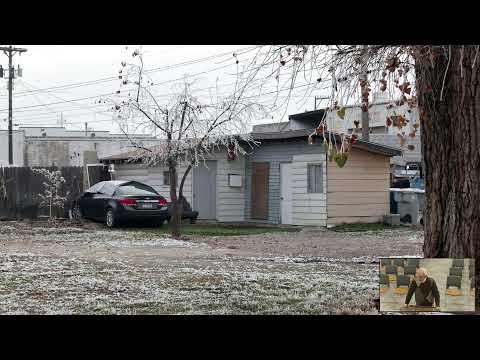
The Agency directed staff to start the process for a site-specific urban renewal area and feasibility study after a developer said environmental testing cleared a Chicago Street gas-station site and requested $175,000 in TIF reimbursement for sidewalks, alley paving, underground power and a fire hydrant.
Raelynn, a URA project lead, and commissioners discussed a developer—s request for Urban Renewal assistance for a former gas station on Chicago Street and directed staff to begin a site-specific urban renewal designation and feasibility study.
Developer Lee Genke (who corrected his last name in the meeting as "Jinky") told the board he planned to close on the property about 30 days after the meeting and begin permitting in February. He said environmental testing found no tanks and that the site is "clean," and asked for $175,000 to pay for sidewalk upgrades to meet city standards, alley paving, undergrounding of power in the alley, installation of a fire hydrant and a 15% contingency.
Staff and commissioners pressed on timing and mechanics. City attorney/URA counsel Mr. Hilty explained that a site-specific urban renewal process requires staff to define proposed boundaries and a city-council declaration of blight; after that the agency would commission a feasibility study and draft a plan that estimates costs and projected tax-increment revenues. Hilty emphasized that tax-increment financing (TIF) typically reimburses developers from increment generated after the project is built unless the agency elects to bond, so there is not an immediately available cash pot to write checks the day a site is designated.
Commissioners debated pursuing a single site-specific district to expedite one project versus pursuing a broader North-area district to address environmental remediation and neighborhood-scale infrastructure. Some members favored a "both-and" approach: establish a narrow, site-specific area to allow the developer to proceed while simultaneously planning a larger district and five-year strategy for wider remediation and investments.
The board asked Raelynn to prepare a feasibility study that will include cost estimates (sidewalks, alleywork, utility extensions) and to coordinate with public works to determine whether projected increment would be sufficient. Staff said updated county base numbers needed for accurate projections may not be available until June, which could affect timetable for some analyses. The agency also asked the developer to provide a detailed list of project budget items already submitted to staff.
Next steps: staff will start the site-specific declaration process for council consideration and schedule a progress update to the URA at the next meeting.