
Court of Appeals hears dispute over admissibility of vocational expert in Smith Wade v. Glyton Construction
Get AI-powered insights, summaries, and transcripts
Subscribe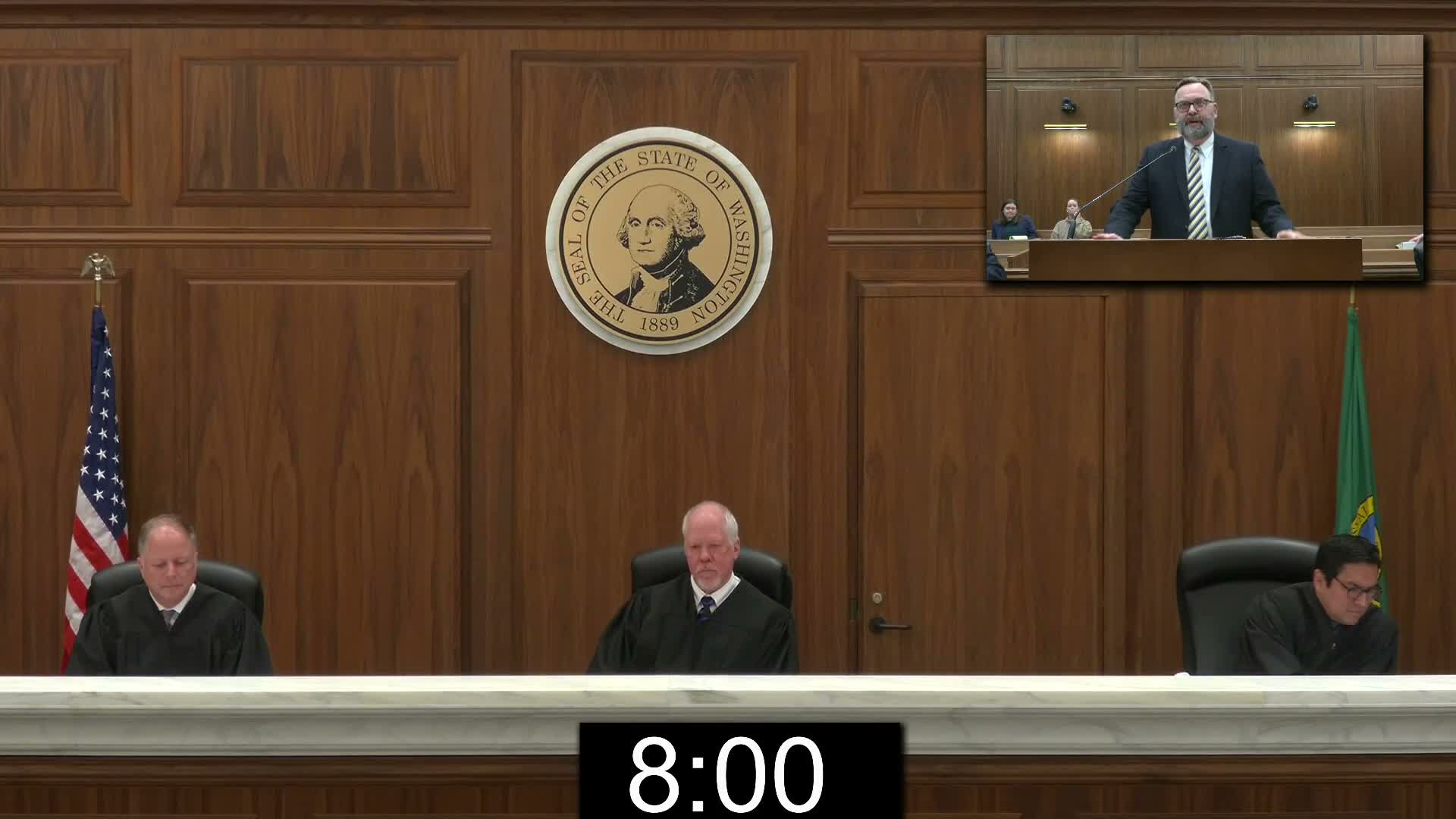
Summary
A Court of Appeals panel heard arguments over whether Glyton Construction waived the right to challenge vocational expert Chapa’s testimony and whether the superior court met Burnett’s requirements when addressing discovery violations; counsel also disputed whether any error was harmless given overlapping medical testimony.
A Court of Appeals panel heard arguments in Smith Wade v. Glyton Construction on whether the employer waived its challenge to vocational expert Lee Chapa’s testimony and whether the superior court made the findings required under Burnett before striking testimony.
Doug Palmer, attorney for Smith Wade, told the panel that the employer repeatedly failed to raise the challenge at the administrative stages and in petitions for review, and therefore the objection to Chapa’s testimony was waived. "Here the employer failed to preserve the issue of striking mister Choppa's testimony in the administrative record before the board of industrial insurance appeals," Palmer said during opening argument.
The judge pressed the parties on what constituted an "aggrieved party" for purposes of petitioning and on whether an evidentiary ruling such as exclusion of testimony should be treated differently from a finding of fact. "It all comes down to what is an aggrieved party," the judge said, asking whether the preservation question related to the petition for review to the board, the appeal to superior court, or both.
Mitch Bridal, attorney for Glyton Construction, argued that Glyton was not an aggrieved party as to some of the IHA’s proposed decisions and that the superior court — as the new trier of fact on de novo review — could determine whether the earlier remedial measures were sufficient. Bridal said the record was prejudiced by the late disclosure and that the whole proceeding suffered prejudice, not merely a narrow inability to prepare for trial.
The panel focused heavily on Burnett, which requires a court to identify why lesser sanctions would be insufficient before striking testimony for discovery violations. The judge emphasized that Burnett requires specific findings describing "what that prejudice is," saying, "You can't just say it created significant prejudice without telling us what that prejudice is."
Neil Diemer, assistant attorney general for the Department of Labor and Industries, told the court the department viewed any error as harmless because Chapa's testimony was cumulative of claimant Dr. Johnson's medical testimony. "It was cumulative testimony to the medical witness of Smith Wade, doctor Johnson," Diemer said, arguing the jury was not asked to decide a new medical condition and therefore could not have been confused by the instruction the department challenged as non-prejudicial.
Counsel also debated the relevance of vocational testimony where the primary contested issue on appeal included the scope and permanence of disability. Palmer and Bridal disputed whether vocational testimony about the labor market and job requirements added material evidence beyond the medical opinions concerning Smith Wade's ability to work.
The panel heard argument over jury instruction language and whether the superior court made required Burnett findings before sanctioning witnesses or allowing late testimony. The court recessed after concluding morning argument and will decide whether the preservation and Burnett issues warrant reversal, remand, or affirmance based on the record and the parties' briefs.
The next procedural step will be the court's written decision; no vote or ruling was announced at the hearing.