Get Full Government Meeting Transcripts, Videos, & Alerts Forever!
Get email alerts on the School Budget topic
No spam. Unsubscribe anytime.
Pittsfield leaders outline school budget process and warn Chapter 70 variability drives swings in funding
Summary
Mayor and Superintendent presented the joint City–School budget process, stressing that state Chapter 70 aid supplies roughly three‑quarters of the school appropriation and that shifts in low‑income groupings and inflation factors can change aid by millions, complicating local planning.
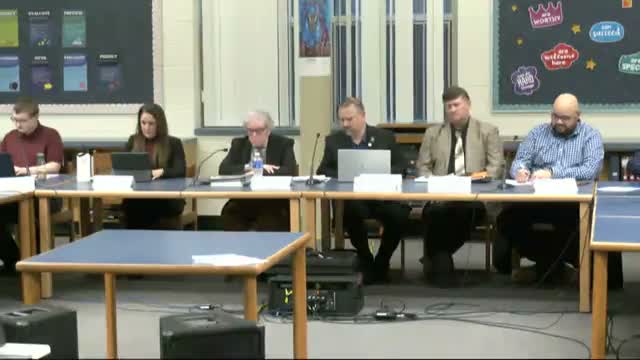
Mayor Marchetti and Superintendent Curtis delivered a joint overview of the city and school budgeting process, telling the Pittsfield City Council and School Committee that state Chapter 70 aid is the central variable shaping the district’s finances. "The lion's share" of the FY25 school appropriation, they said, comes from state aid, and changes in the Chapter 70 low‑income grouping produced multi‑million‑dollar swings that forced multiple pivots during budget development.
Curtis said the school committee appropriation was about $82.7 million and that roughly 77 percent of that figure reflected state Chapter 70 and Chapter 78 revenue. He explained that the Chapter 70 formula relies on enrollment counts, low‑income grouping, a statewide inflation factor and municipal capacity factors. "When we have such a large share coming from Chapter 70, when there's variability in Chapter 70, it really forces us to pivot," Curtis said, describing a move between funding groups that produced a large year‑to‑year change in aid.
The mayor said the city directed departments to prepare level‑funded and level‑service budgets and set an early 3.5 percent target for the schools to begin planning; he cautioned that not meeting a "wish list" increase is different from an actual cut. "So when we start talking about cuts being made from a budget, that we're being factual about the statements that we're making," he said.
Both leaders described the budget calendar: school budget work begins in October with principal and director meetings, continues through workshops and public hearings in March, and culminates in school committee adoption in late April before the adopted budget is forwarded to the city finance department. Officials also reminded members that federal ESSER grant funding ended in prior years, requiring tradeoffs as grants expired.
Councilors pressed administrators about staff engagement in the process. Several council members and school committee members said employees often do not know how the budget process works or lack a safe, easy way to register input. Curtis said principals, school councils, unions and targeted staff updates are existing routes and agreed to explore additional, more formal channels so frontline staff can share priorities early in the fall budget cycle.
The city council and school committee each voted to accept the presentation and place it on file; both motions were recorded as carried with unanimous voice votes.
What happens next: the school committee will finalize its adopted budget later in the spring before sending the adopted line‑item appropriation to the city for inclusion in the municipal budget.