Get Full Government Meeting Transcripts, Videos, & Alerts Forever!
Get email alerts on the Cannabis Dispensary topic
No spam. Unsubscribe anytime.
Applicant outlines kiosk-style cannabis dispensary, renovations at 80 La Mar in Town of Babylon
Summary
At an informational hearing, applicants described plans to convert an industrial building at 80 La Mar into a cannabis dispensary with kiosk ordering, a renovated façade, 17 parking spaces and expanded security; the hearing was informational and no vote was taken.
An applicant team told the Town of Babylon planning board on Tuesday that it plans to convert a roughly 7,500-square-foot industrial building at 80 La Mar into a cannabis dispensary, describing a kiosk-based ordering system, a full building renovation and security measures intended to limit on-site display and loitering.
Gerard Glass, speaking on behalf of the applicant, said the project would remove about 800 square feet of warehouse space, create roughly 1,600 square feet of retail area and add a new façade, parking lot and landscaping as part of an overall site makeover. "The use is proposed to be a cannabis dispensary," Glass said during the informational hearing, noting the site sits mid-block with a landfill to the rear and a cemetery to the north.
The team described operations built around electronic ordering. "This store uses proposes to use a kiosk...the average customer time according to the formulas that they've used around 10 minutes," Glass said, explaining that customers place orders at kiosks and staff retrieve products behind glass for pickup. Architect Steve Favata said there will be a separate entrance and exit for the retail space, and engineer Jeff Pitango said the parking lot will be renovated to meet current code, including new pavement, drainage, ADA-compliant aprons and ramps, lighting and landscaping.
Applicants told the board there will be 17 parking spaces shown on the plans, two of which are currently designated near overhead doors but would be used for employees with the expectation that employee and delivery vehicles can be stored inside the warehouse overnight. Glass said the team has room inside the building for employee and delivery vans and that daytime deliveries would be transient.
On hours and security, Glass said the applicants are proposing broad initial hours that they expect to pare back as customer patterns emerge. "They're proposing 8 AM to 2 AM," he said. He and other team members described a fully alarmed, sprinklered facility with corporate on-site security training and mandatory ID checks for all sales. Quintal and Polsonelli emphasized state seed-to-sale tracking and background-check requirements for staff, saying those systems help enforcement and tax collection and reduce illicit-market risks.
Board members pressed the team on the cross-access easement recommended by planning staff: Glass acknowledged a garage door on the neighboring property to the north that appears to open onto the project site but said no cross-access agreement currently exists and the neighbor has indicated no interest in using that garage access. Glass flagged that condition for the board to consider in its review.
Members also questioned interior queuing and public visibility of product. Anthony Quintal, identified as one of the owners, said there will be no product on display. "No, there's no product on display. It's all it's all virtual," he said, describing bench seating for elderly customers and perimeter ordering pads that feed into the kiosk/pickup sequence.
The applicants said refuse will be kept inside and that sewage connections are pending health-department approval. Glass said he expected routine utility services and no unusual noise or odor impacts from the proposed use.
Fred Polsonelli, of the operations team, described prior experience opening medical and adult-use stores and urged the board to view a compliant, lab-tested storefront as a tool to push illicit sellers out of the neighborhood. "If we can open legal stores with all lab tested, highly compliant businesses, I think we could do something really good for that neighborhood," Polsonelli said.
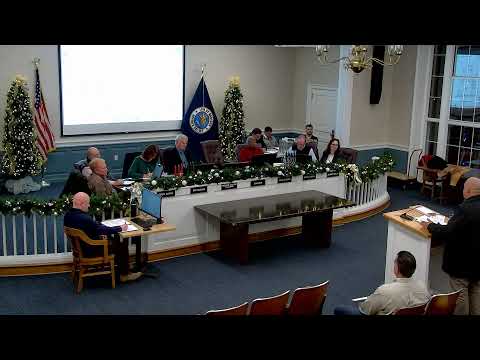
The planning board treated the event as an informational hearing required for a special-exception application to the zoning board of appeals; no formal action or vote was taken. The board and applicants exchanged follow-up questions about parking, access, and engineering drawings, and the applicants said they will continue to work with planning staff on outstanding details.
Next step: the applicants indicated they will pursue the special-exception process with the zoning board of appeals and finalize outstanding approvals (including health-department sign-off on sewage) before any building or occupancy permits are issued.