Get Full Government Meeting Transcripts, Videos, & Alerts Forever!
Get email alerts on the Wetlands Policy topic
No spam. Unsubscribe anytime.
TDEC proposes streamlined permitting, new wetland tiers and mitigation fund; builders and conservationists clash
Summary
Tennessee environmental officials outlined 18 recommendations to clarify wetland definitions, broaden general permits and create a voluntary wetland conservation fund; builders warned of higher costs and property‑rights impacts while conservation groups stressed flood and water‑quality risks. Committee took no votes (study session).
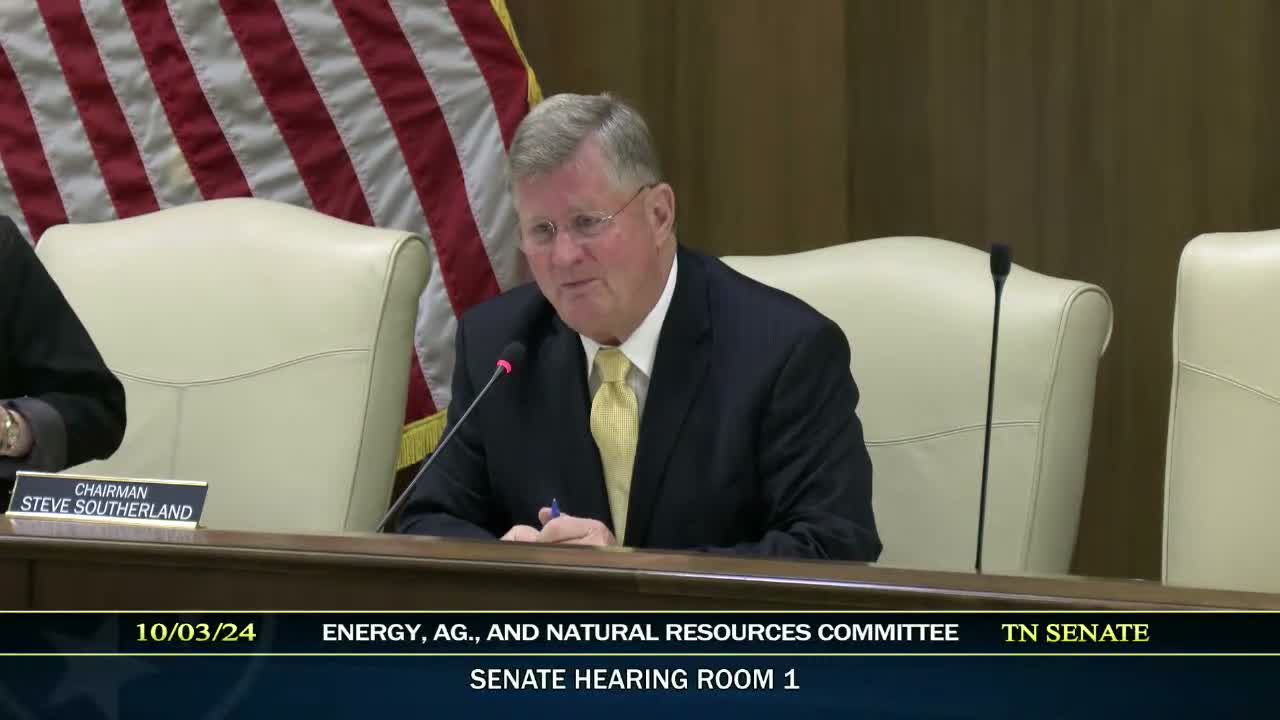
TDEC Commissioner David Salyers told the Energy, Agriculture and Natural Resources Committee that the department’s wetlands report and a recent stakeholder summit aim to balance economic growth with long‑term natural‑resource protection. "This does not impact agricultural activities," Salyers said, adding that the process was launched after House Bill 1054 was deferred for further study.
Salyers summarized 18 recommendations including adding a statutory definition for geographically isolated wetlands (GIWs), creating wetland quality tiers (low, moderate, high), and expanding the department’s general permits to speed approvals. He proposed allowing up to 0.5 acre of low‑quality wetland impacts under a general permit and up to 2 acres using a proposed voluntary wetland conservation fund as an "easy button" mitigation option intended to move reviews from months to days.
Why it matters: TDEC says the changes would cover the majority of small wetland projects and reduce permit turnaround. The department cited internal permit data and academic input indicating about two‑thirds of Tennessee wetlands are smaller than 2 acres; staff also reported an average general‑permit turnaround of four days. Salyers urged the General Assembly to direct the Tennessee Advisory Commission on Intergovernmental Relations to study the economic and societal impacts of wetland regulation.
Supporters and builders: Industry witnesses said they joined TDEC’s stakeholder process but urged clearer statutory rules. Keith Grant, a West Tennessee home builder, gave examples he said show how small depressions or beaver‑created ponds can trigger expensive mitigation: one parcel he cited was reclassified at a much higher mitigation ratio after field review, which he said cost a prospective development millions and effectively halted a multifamily project. RJ Gibson of the Tennessee Chamber urged that tiers be placed into statute to give businesses regulatory certainty.
Conservation and community concerns: Environmental witnesses and conservation groups warned that even "low‑quality" wetlands perform important functions—recharging aquifers, filtering pollutants and reducing flood peaks. George Nolan of the Southern Environmental Law Center said "an acre of wetlands can hold more than a 1,000,000 gallons of water," and Erin Jones of Young Gifted Green warned that lowering mitigation ratios could worsen flooding in low‑income and majority‑Black neighborhoods in Memphis.
Technical reforms and implementation: TDEC said it is updating the Tennessee Rapid Assessment Methodology (TRAM), developing a GIS wetland mapping tool, and preparing training for certified wetland professionals to support a recently enacted third‑party law. The department also proposed a presumption of correctness for qualified wetland professionals’ reports to shorten review times. Commissioner Salyers apologized that the mapping‑tool demo was delayed and said it will be available to the committee in the coming weeks.
What was not decided: The meeting was a study session and the committee did not vote on legislation or regulations. Lawmakers asked for more data on the specific acreage thresholds, the cost‑benefit analysis behind proposed limits and the appeals timeline for third‑party determinations.
Next steps: TDEC recommended a TACIR economic study and said it would continue stakeholder engagement; the committee adjourned with no formal actions taken.