Get Full Government Meeting Transcripts, Videos, & Alerts Forever!
Get email alerts on the Technical Assistance topic
No spam. Unsubscribe anytime.
CURB board authorizes Phase 2 coaching platform, approves up to $150,000 for technical assistance
Summary
The board authorized staff to proceed with Phase 2—creating a coaching platform and co‑learning community to build local project development capacity—authorizing up to $150,000 plus a 2% college fee and using an interagency contract with South Puget Sound Community College.
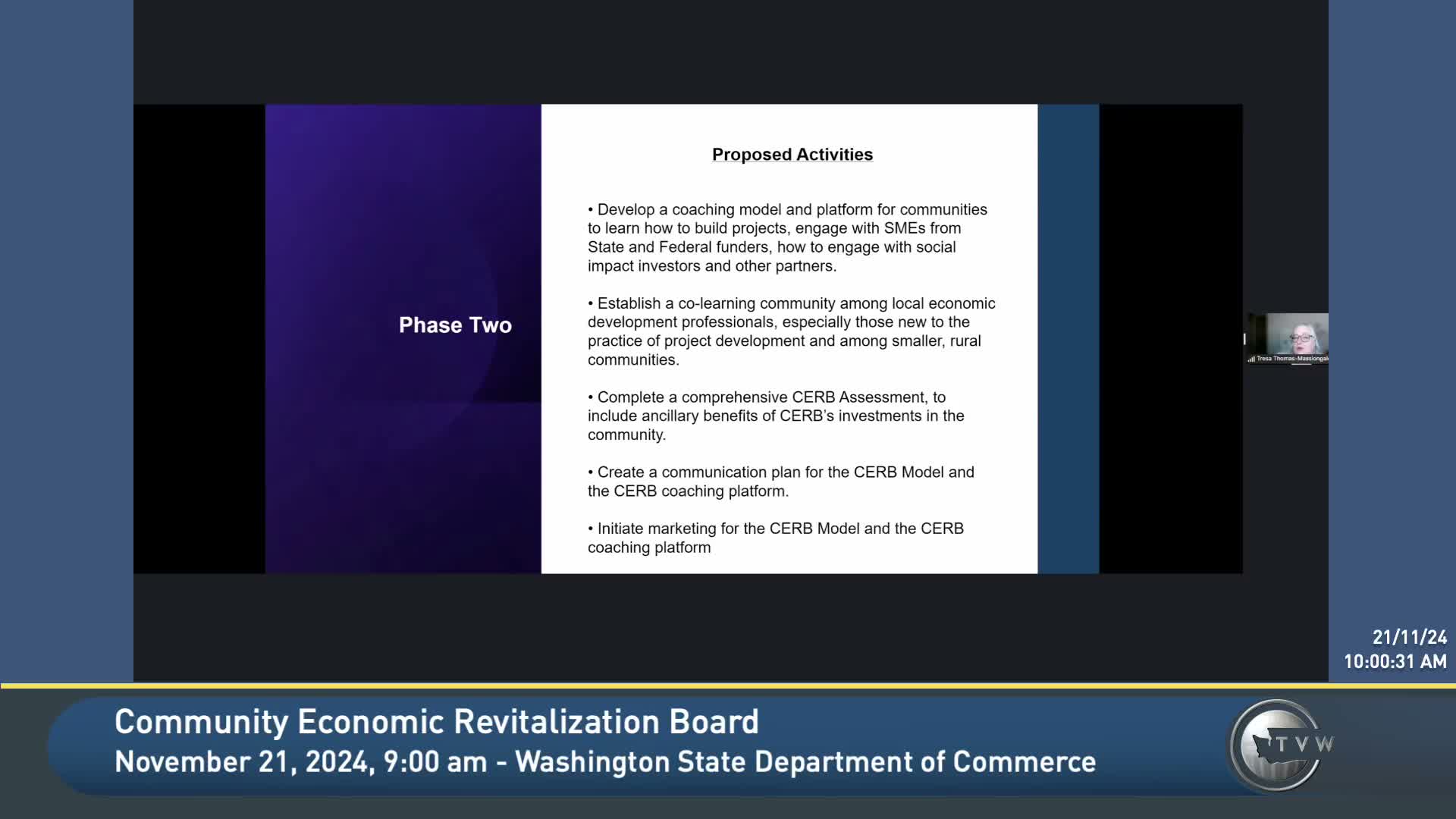
The Community Economic Revitalization Board authorized staff to move forward with Phase 2 of CURB’s technical assistance work, which includes developing a coaching platform, establishing a co‑learning community for local practitioners and completing a comprehensive CURB model assessment.
Staff told the board the Phase 2 budget could be up to $150,000 plus a 2% fee routed through South Puget Sound Community College under an interagency agreement. Janae Stark explained the interagency contract avoids a time‑consuming RFP and allows CURB to act quickly because the funding window is only available through June 2025.
Presenters Teresa Thomas Massengale and Dr. Sandra Archibald reviewed Phase 1 findings that informed the proposal: smaller and remote communities lack project development capacity; CURB is well positioned to structure a co‑learning community and certificate or coaching model that complements existing offerings from WSU extension, University of Washington and others. Board members emphasized the need to coordinate with established partners (WIDA, IEDC, workforce boards) and to design the work to reduce staff burden while broadening community capacity.
A motion to authorize staff to proceed with Phase 2 (up to $150,000 plus the South Puget Sound Community College 2% fee) was moved and seconded; the board voted in favor and the motion carried. Staff said Phase 2 will start with surveys and interviews to define content, staging and audiences and will return to the board with scope and pre‑contract conditions as needed.
Next steps: staff will finalize a scope, execute the interagency agreement and begin community outreach and participant surveying to design the coaching platform.