Get Full Government Meeting Transcripts, Videos, & Alerts Forever!
Get email alerts on the Disaster Food Assistance topic
No spam. Unsubscribe anytime.
Nicollet County commissioners decline to opt into state Disaster SNAP program, citing staff capacity and short notice
Summary
After a lengthy discussion about staffing, training and uncertain cross‑county impacts, the Nicollet County Board of Commissioners voted not to opt into Minnesota's Disaster SNAP program for Aug. 26–30. Staff had warned the state deadline required responses by Aug. 14 and would likely require overtime.
Nicollet County commissioners voted on Aug. 13 not to opt into Minnesota’s Disaster Supplemental Nutrition Assistance Program (D‑SNAP) for the week of Aug. 26–30, after Health and Human Services staff warned the board the state’s short turnaround and operational requirements would strain local capacity.
Health and Human Services staff told the board that D‑SNAP would provide one month of temporary food assistance to low‑income households affected by June flooding, but that it requires on‑the‑spot interviews for walk‑in applicants, half‑day training for 2–3 staff and the ability to handle an unknown application volume. The state’s Food and Nutrition Service (FNS) application window and a deadline for counties to indicate capacity meant the county had to respond to a state request by Aug. 14.
The board’s discussion centered on staffing and uncertainty about cross‑county demand. Commissioners repeatedly raised concerns that staff are already stretched by ongoing public‑assistance work and by the second‑year unwinding of pandemic‑era public‑health programs. Health and Human Services staff said the county’s income‑maintenance team was working overtime and that additional training and overtime for D‑SNAP week would be unfunded.
Commissioners also noted unanswered questions about whether residents of neighboring counties would be able to apply in Nicollet County if their home counties declined to operate D‑SNAP. Staff said the state had shared a regional data point — about 800 individuals who had applied for FEMA individual assistance — but that it was unclear how that number mapped to D‑SNAP applicants in the 19 affected counties.
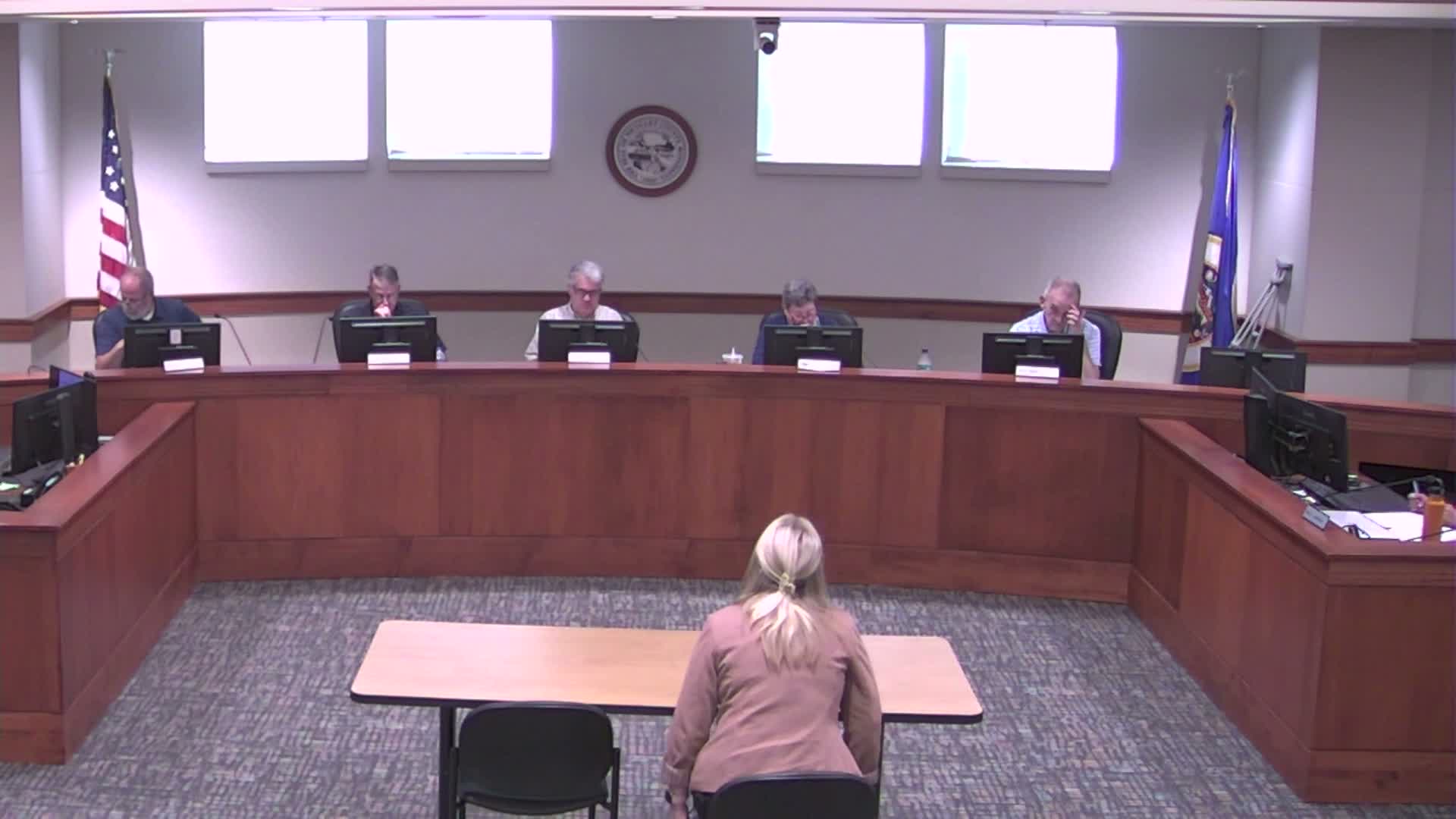
At the board table, one commissioner criticized the state’s timeline as “disorganized chaos,” while another argued the county should not foreclose access to a potential benefit. Board members explored delaying the decision, including holding an emergency meeting the next day if needed, but the motion on Aug. 13 to opt in failed on a voice vote recorded as 1 in favor and 4 opposed.
The county attorney and staff did not record named roll‑call votes for the D‑SNAP motion; the vote was taken by voice. Staff said that if the county had opted in and been approved by the state, the county would have been required to ensure staff completed the half‑day training and to provide interview coverage during the week in question.
Because the motion failed, Nicollet County will not be listed as an opting‑in county for the Aug. 26–30 D‑SNAP operations. Staff said they will continue to track regional decisions and state guidance and could revisit the issue if circumstances change.
Next steps: no further local action was taken at the meeting; staff will monitor state updates and neighboring counties’ decisions about D‑SNAP and report back if additional information becomes available.