Get Full Government Meeting Transcripts, Videos, & Alerts Forever!
Get email alerts on the Public Health Policy topic
No spam. Unsubscribe anytime.
Nicollet County adopts environmental health ordinances ahead of single-county community health board transition
Summary
The Board approved updates to lodging, food and beverage, mobile home parks/camping, youth camp, and public pool ordinances to support Nicollet County's transition to a single-county community health board and delegation agreement with the Minnesota Department of Health effective Jan. 1, 2025.
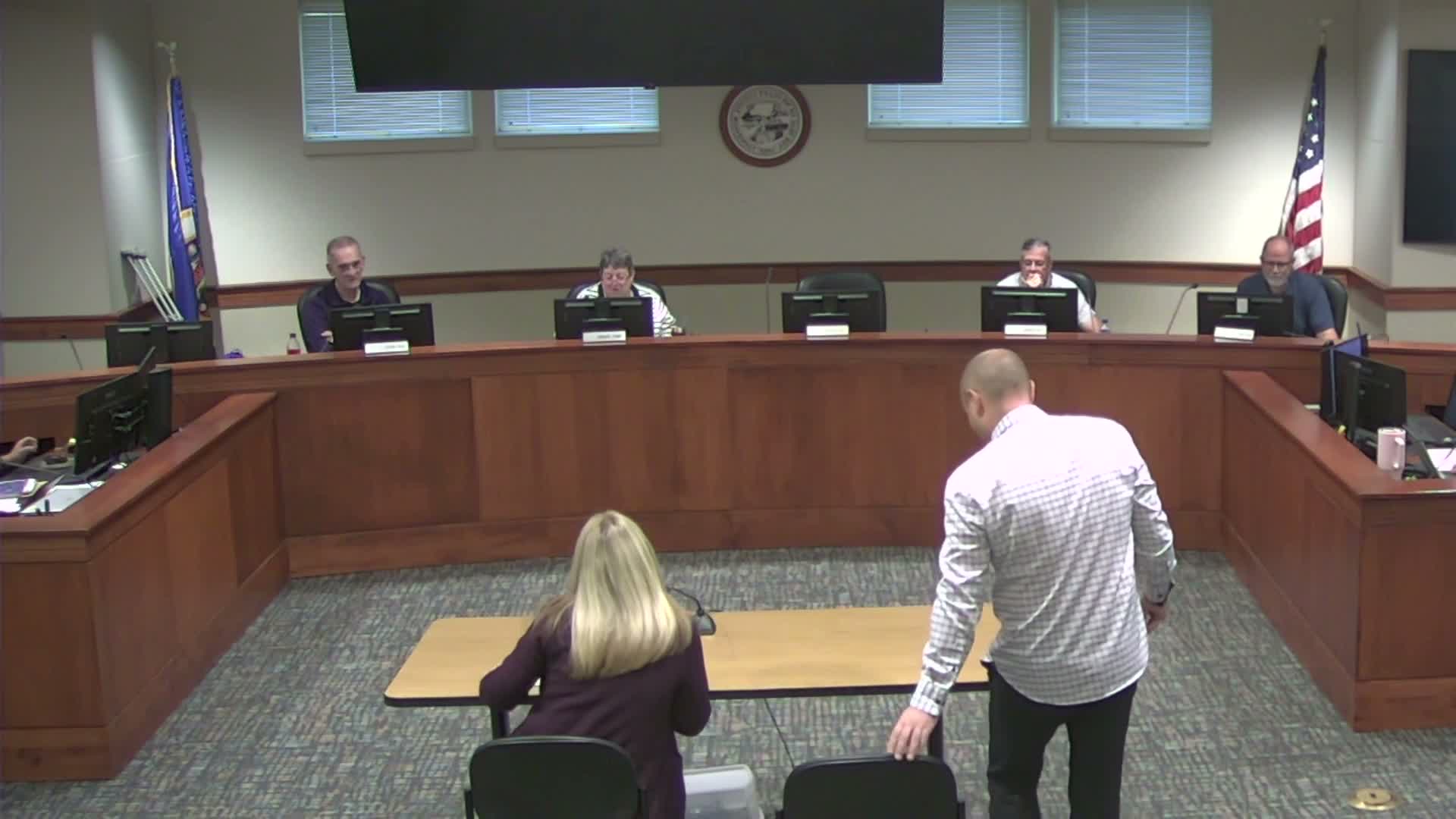
The Nicollet County Board on Sept. 24 approved revisions to several environmental health ordinances to prepare for the county’s transition to a single-county community health board effective Jan. 1, 2025 and for a delegation agreement with the Minnesota Department of Health.
A county staff member explained that the lodging ordinance was updated to reflect the transition, to remove environmental health staff from the appeals board definition and to incorporate trafficking-prevention training requirements for hotel and motel operators. Short-term rental properties that meet the county’s definition of a hotel or motel will be licensed accordingly.
The food and beverage ordinance was revised to align with applicable Minnesota statutory citations, to simplify license categories (removing certain legacy categories such as beer/wine with table service and several school license types) and to add a reciprocal mobile food unit license. Staff and several commissioners emphasized local control advantages, including more rapid response to emergencies, local licensing education and closer familiarity with businesses compared with direct state administration.
Separate ordinance updates for manufactured home parks, recreational camping areas and youth camps and for public swimming pools were also approved. The public pool updates include revisions to the private pool definition to match Minnesota rules.
All ordinances were approved after staff explanation and roll-call votes. No members of the public testified during the hearing and the board closed the public hearing before moving to approve each ordinance.