Get Full Government Meeting Transcripts, Videos, & Alerts Forever!
Get email alerts on the Nursing Home Staff Ratios topic
No spam. Unsubscribe anytime.
Committee pauses nursing-home staff-ratio regulation pending fuller fiscal review
Summary
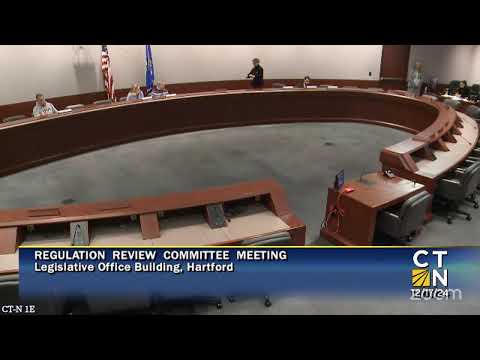
The Legislative Regulation Review Committee voted to reject regulation 2024-026 without prejudice after DSS and DPH testimony produced differing cost estimates; members cited uncertainty about Medicaid reimbursements and potential impacts on low-margin, Medicaid-dependent nursing homes.
Representative Dathan, chair of the Legislative Regulation Review Committee, opened consideration of proposed regulation 2024-026 from the Department of Public Health on nursing home staff ratios and initially moved to accept the LCO recommendation of approval with technical corrections.
Senator Kissel raised concerns that the regulation could shift substantial costs to the Department of Social Services (DSS). Nicole Godburn, fiscal manager for reimbursement and certificate-of-need at DSS, told the committee that DSS examined nursing-home cost reports and estimated roughly 24 homes would need to add certified nursing assistant (CNA) coverage and about four homes would need additional social-worker coverage. Godburn said the department calculated a gross increase near $470,000 and, after federal Medicaid match, a state share of about $235,000 annually.
Several members said those figures appeared low compared with earlier estimates they had seen. Senator Kissel and Representative Fishbein pressed DSS and Department of Public Health (DPH) staff on whether the analysis counted full-time hires or smaller adjustments such as increased part-time hours or per-diem staffing; DSS and DPH staff said many homes already meet the new standard and that the marginal shortfall could be met in some cases by increased hours rather than hiring full-time equivalents.
Senator Austin asked whether the workforce supply (CNAs and social workers) existed to meet the requirement. Barbara Cass, senior adviser to the DPH commissioner for long-term care, said DPH survey activity has not identified systemic shortages of social workers and that nurse aide training programs expanded after the COVID period. DPH reported 11 staffing-related issues found in 161 recent surveys but said most nursing homes remain in compliance when inspected.
Committee members also debated how Medicaid reimbursement would respond to a regulatory mandate. DSS staff cited a statutory and regulatory framework (including citation to the reimbursement authority under 17b-340 referenced in testimony) that allows reimbursement adjustments if a mandate meets a defined threshold and said Connecticut’s acuity-based reimbursement system updates rates quarterly to reflect residents’ needs.
After discussion, Representative Godfrey withdrew the earlier motion to approve. Representative Fishbein moved to reject regulation 2024-026 without prejudice, seconded by Senator Kissel, so the agencies could continue work on fiscal and implementation questions. The administrator called the roll and the motion to reject without prejudice passed.
Next steps: the committee rejected 2024-026 without prejudice to allow DSS, DPH and LCO to refine fiscal notes, staffing analyses and precisely identify the number and type of hires a revised rule would require.