Get Full Government Meeting Transcripts, Videos, & Alerts Forever!
Get email alerts on the Hazard Mitigation topic
No spam. Unsubscribe anytime.
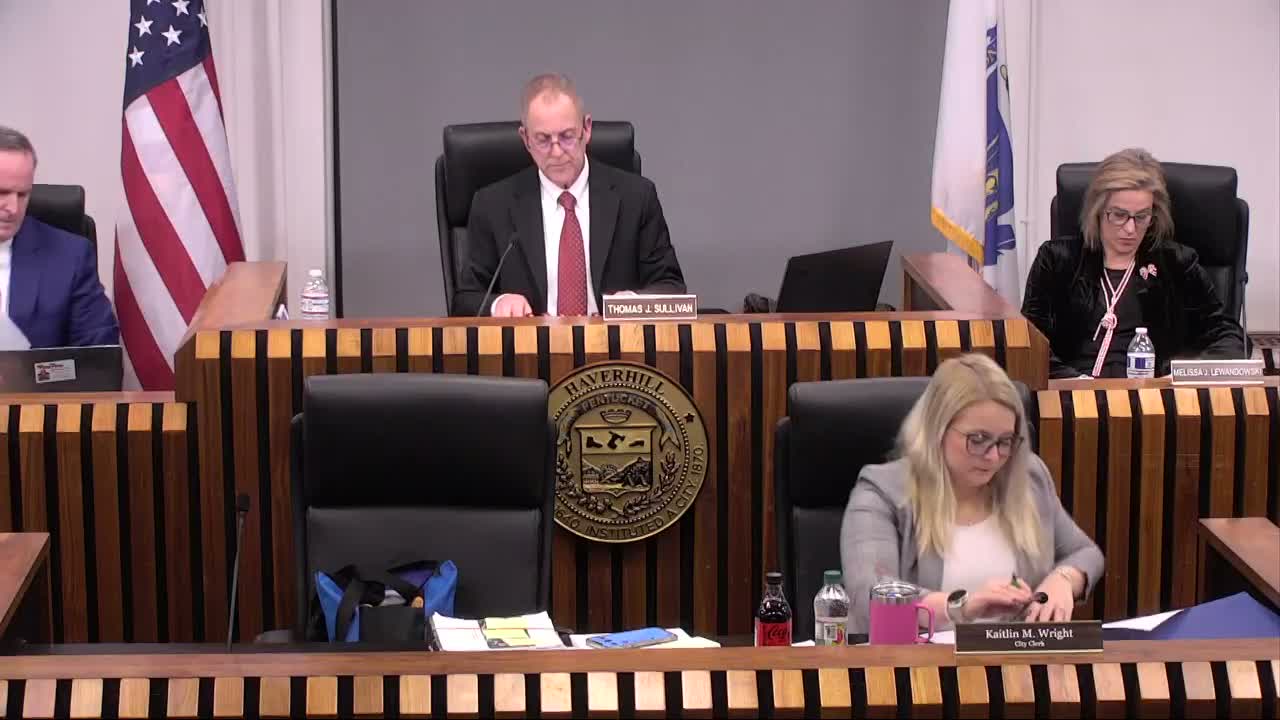
Haverhill council adopts regional hazard mitigation plan to restore FEMA funding eligibility
Summary
Council unanimously adopted the Merrimack Valley Regional Multi‑Hazard Mitigation Plan after FEMA/NEMA approval-pending-adoption, enabling Haverhill to apply for certain proactive federal and state mitigation grants and to guide infrastructure priorities over the next five years.
The Haverhill City Council voted unanimously Tuesday to adopt the 2024 Merrimack Valley Regional Multi‑Hazard Mitigation Plan, a regional update prepared with the Merrimack Valley Planning Commission and approved pending local adoption by the Massachusetts Emergency Management Agency and the Federal Emergency Management Agency.
Chief Robert Pistoni, speaking as the city’s emergency management director, described the plan as a five‑year nonbinding guidance document that identifies natural hazards, vulnerabilities and mitigation strategies and said local adoption is required to finalize the plan with FEMA and to qualify for certain proactive hazard‑mitigation grant programs. Hannah Mogensen of the Merrimack Valley Planning Commission explained the update process, public‑engagement steps and the agencies’ approvable‑pending‑adoption status.
Councilors asked how the plan helps the city access infrastructure grants such as culvert upgrades. Mogensen and Pistoni said adoption strengthens grant applications by providing documented local needs and priorities and signaled that the plan will help the city pursue projects to reduce flood vulnerability and other risks. They estimated the plan would be active by late January or early February after all participating communities sign local resolutions and FEMA finalizes approval.
The council moved to adopt the plan; the roll‑call vote recorded 11 yeas, 0 nays and the motion carried. Councilors and staff noted the plan’s role in prioritizing capital and mitigation projects and in enabling applications for building-resilience and flood‑mitigation funds.
The adoption is procedural: the plan itself is nonbinding and does not by itself obligate funds. Councilors asked staff to pursue grant opportunities and to coordinate capital planning with the mayor and department heads as next steps.