Get Full Government Meeting Transcripts, Videos, & Alerts Forever!
Get email alerts on the Youth Violence Prevention topic
No spam. Unsubscribe anytime.
Hampton honors seven ‘credible messengers’ who mentor youth, cites $2.4M council investment
Summary
The Hampton City Council recognized seven formerly incarcerated mentors and violence interrupters for mentoring and reentry work, noting a $2.4 million 2022 investment that organizers say has helped more than 480 young people across the city.
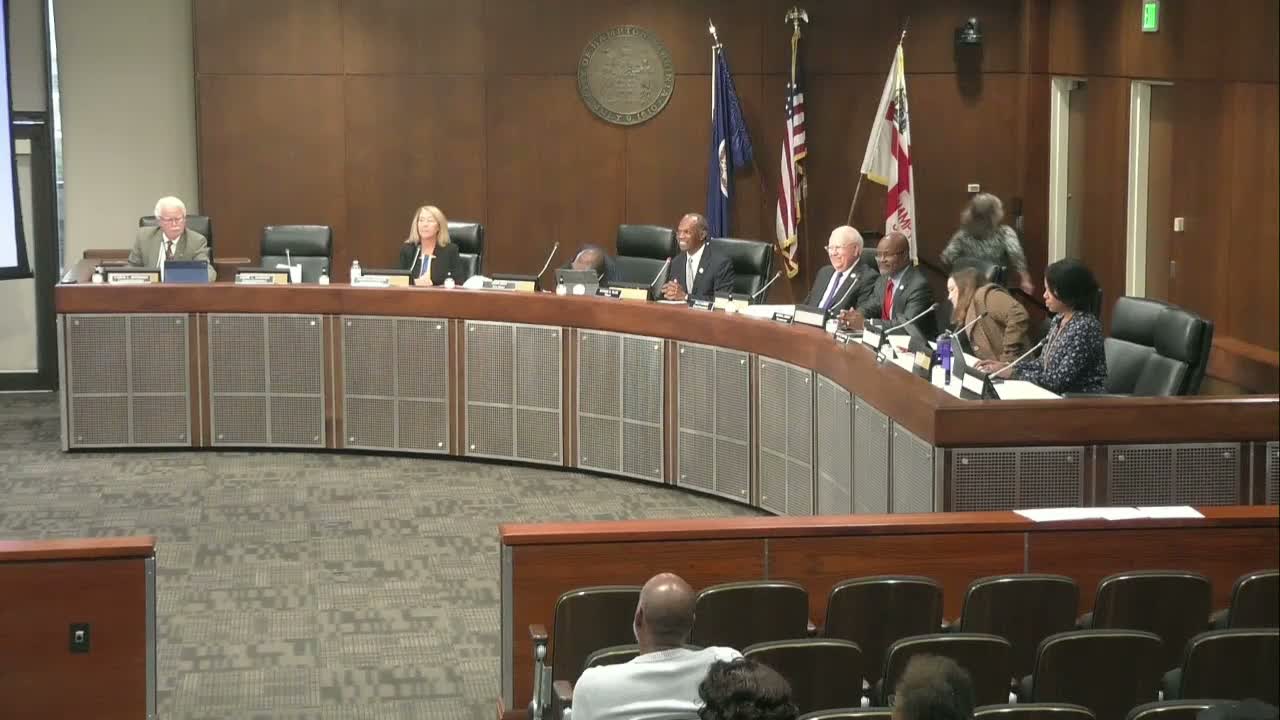
Hampton’s City Council on a Spotlight on Citizens night recognized seven "credible messengers" — mentors and violence interrupters who organizers say use lived experience to steer young people away from violence and toward education, jobs and recovery.
Brian Marchesi, introducing the program, said the Office of Youth and Young Adult Opportunities has focused on mentoring, restorative services and supports for people returning from incarceration. He said the City Council invested $2,400,000 in 2022 to support grassroots organizations working with youth, and that those efforts have reached more than 480 young people.
Gabe Diaz of the Office of Equity and Inclusion opened a brief remembrance for Theodore D. "Teddy" Rainey, a community partner who died Sept. 11, 2024. Diaz invited Rainey’s family to stand and offered the city’s condolences.
The honored mentors included Adrian Cook, who presenters said helped 20 young people obtain jobs in a recent month and is working with 39 individuals; Reggie Gatlin, who was recognized in absentia with John Davis accepting on his behalf; Martez Gurley, who helps teens through a family-founded program called Madeline’s Project; Khaled Karam, described as having more than 25 years of work reducing youth violence; George Keenan, who mentors young men after a lengthy incarceration; Troy Ketchmore, credited with helping mentees earn GEDs; and Daryl Redmond, a certified violence interrupter and peer recovery specialist with trauma-informed training.
Honorees and presenters repeatedly emphasized the role of trust and lived experience in reaching young people. Khaled Karam, describing the strain of his work, was quoted in the program saying, "I can't be everywhere at once." Troy Ketchmore was quoted saying, "I still owe, I still need to do my part." Presenters relayed a moment from Daryl Redmond’s work in which a mentee told him, "I need a father, not just a father figure but a real father," a remark used to underscore why credibility matters in mentoring.
Organizers also referenced participation in initiatives such as the Bloomberg–Harvard City Leadership Program and the local "Hopeful Hampton" effort (program name appears as Hopeful Hampton in remarks) as part of a strategy combining prevention, intervention, enforcement and community engagement. The program concluded with a public appeal — particularly to men in the community — to step forward as mentors and role models.
The council adjourned at the end of the program; no formal votes or motions were recorded during the spotlight portion of the meeting.