Get Full Government Meeting Transcripts, Videos, & Alerts Forever!
Get email alerts on the Internal Audit topic
No spam. Unsubscribe anytime.
Sioux Falls council adopts three-year audit plan as residents raise concerns about code enforcement, easements and policing
Summary
The council approved a risk-based three-year audit plan by a 6–0 vote after a presentation by Internal Auditor Ryan Losing; multiple residents used public comment to allege problems with code 160, sewer easements, policing and council transparency.
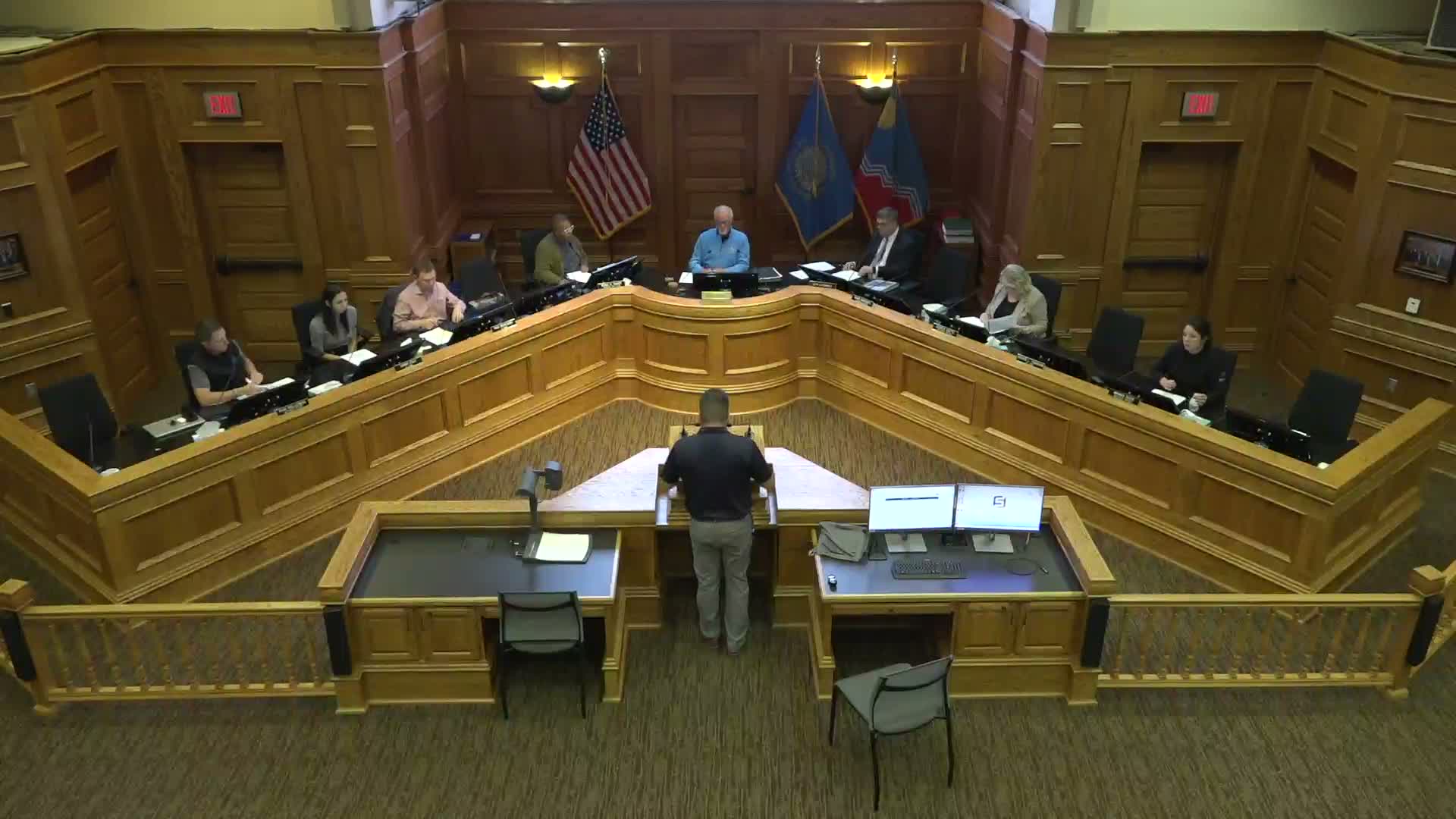
The Sioux Falls City Council on Oct. 8 approved a three-year, risk-based audit plan recommended by the audit committee and developed with Clifton Larson Allen. Internal Auditor Ryan Losing outlined planned audits that include facility security, metro communications, code enforcement, payroll and pension management, IT security controls and a transit performance audit tied to the city’s new Via contract.
Losing told the council the audit program includes planned, consulting and special-request engagements and that the plan can be amended as new priorities arise. The recommendation came from the audit committee and staff after a citywide risk assessment and interviews with management.
During the public comment period tied to the audit and later during general public input, several residents raised concerns that they said the audit should address. Chester DeYoung alleged that the city had allowed multifamily development contrary to what he described as "ordinance 160,” complained that a proposed 24-foot road did not meet a 39-foot standard he cited, and said the city lacks an easement for a 390-foot sewer main under his property, which has prevented routine sewer maintenance. DeYoung said he had told city personnel they could not cross his property, and he accused staff of using private property access to reach infrastructure.
George Hahn, who identified himself as having decades of experience in real estate and construction, said narrower roads are common where roads are not dedicated to the city (for example, condominium developments) and noted the code allows for narrower private rights-of-way in those circumstances.
Other speakers raised separate grievances. Catherine Bridal repeatedly criticized city enforcement and alleged that police removed property from her home; she urged the council to address what she described as systemic failures. Zachary Rogers urged greater transparency, saying the routine unanimous approvals suggest pre-meeting coordination and recommending televised information sessions in addition to the formal council meetings to improve public accountability.
Councilmembers moved and seconded approval of the audit plan and adopted it on a recorded vote of 6 to 0. Losing said the internal audit office will continue to refine priorities and can add special-request audits in response to new information.
The council’s approval sets the audit plan in place; several residents said the audits should scrutinize code enforcement practices, sewer easement management and policing concerns mentioned during public comment.