Get Full Government Meeting Transcripts, Videos, & Alerts Forever!
Get email alerts on the Animal Control Vicious Dog topic
No spam. Unsubscribe anytime.
Council hears police and city-attorney proposal to revise 'vicious dog' standards; second reading set for Dec. 17
Summary
City staff proposed narrowing evidence hurdles for 'vicious' dog declarations — removing reliance on difficult medical measurements, adding a 'serious injury' definition and a multi-dog criterion — and the council voted to set a Dec. 17 second reading.
City legal and public-safety staff on Dec. 10 asked the Sioux Falls City Council to consider clarifying how the city declares a dog "vicious," saying recent cases revealed difficulties in meeting existing standards.
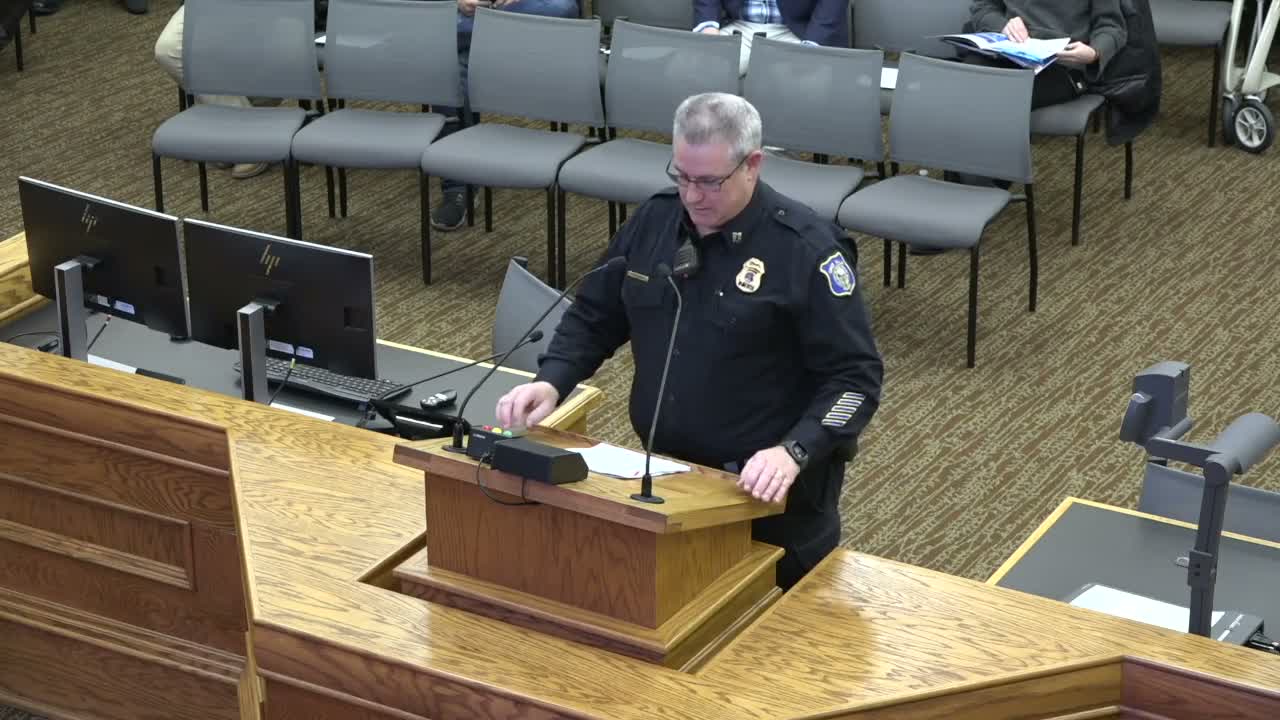
Captain Jeff Garden of the Sioux Falls Police Department’s Uniformed Services Division outlined the proposal’s intent: to clarify language and streamline the process so officials can apply the more-serious "vicious" declaration when appropriate. He said the changes are meant to "help clarify the standards needed to declare dog vicious."
Keith Allenstein of the City Attorney’s Office explained the technical problem: existing ordinance language required measurements such as a dog’s tooth or the depth of a wound — procedures that are not standard practice for veterinarians or physicians and pose safety challenges when dealing with aggressive animals. Allenstein said the proposed amendments keep objective criteria but expand allowable factors, including allowing a declaration when there is "serious injury to the person or an animal" (defined in the presentation as injury that "creates a substantial risk of death, causes serious and prolonged disfigurement, prolonged impairment of health, or prolonged loss or impairment of function"). The proposal also adds the ability to make declarations when multiple dogs acted together in a pack-like manner, which staff said was necessary after recent incidents where identification of an individual dog was not possible.
Allenstein said the change is not intended to "euthanize more people's dogs" but rather to make declaration procedures workable in cases that meet the more-serious threshold: "We're looking to make it easier to do this in the right situation, but not too easy. We still have these objective criteria that we have to follow." The council voted to set a second reading for Dec. 17.
Next steps: the ordinance language will return for a second reading on Dec. 17; if adopted, the change would alter administrative thresholds used by animal control and the City Attorney’s Office when considering restricted versus vicious declarations.