Get Full Government Meeting Transcripts, Videos, & Alerts Forever!
Get email alerts on the Land Use Rezoning topic
No spam. Unsubscribe anytime.
Savannah council approves rezoning of 1105 East Anderson Street over historic-preservation objections
Summary
After neighborhood testimony and debate, the Savannah City Council voted 8–1 to rezone 0.14 acres at 1105 East Anderson Street from TR‑2 (traditional residential) to TC‑1 (traditional commercial), with proponents saying the modest mixed-use plan fits an intensifying Waters Avenue corridor and opponents warning it threatens neighborhood character.
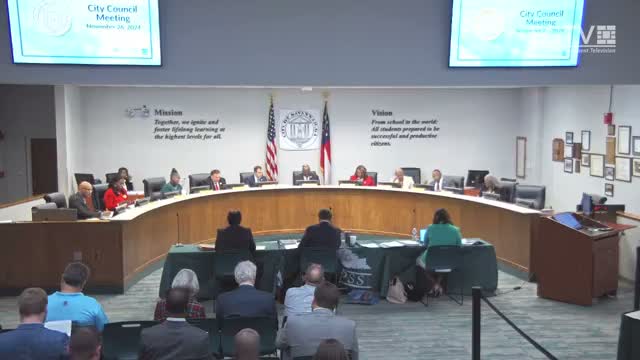
The Savannah City Council voted 8–1 on Nov. 26 to rezone 0.14 acres at 1105 East Anderson Street from TR‑2 (traditional residential) to TC‑1 (traditional commercial), a change the petitioner said will allow a small mixed-use building with residential units above and a studio or similar ground-floor use.
Edward Morrow, director of development services at the Metropolitan Planning Commission, told the council the parcel sits on a corridor the city's future land-use map already signals for commercial inclusion and that neighborhood engagement since the MPC hearing had been “positive” with support from the alderman and some neighbors. Morrow said the area is nationally historic‑eligible but currently lacks a local protective district.
Artis Wood, chair of Scenic Chatham, urged council to deny the change and said the move would chip away at Savannah’s historic neighborhoods. “This proposed zoning may look insignificant, but it is a straw that may well break the camel's back,” Wood said, asking the council to preserve community character rather than permit commercial conversion.
The petitioner and counsel emphasized their intent for a two‑story building that they described as consistent in scale with surrounding parcels. Council members questioned how to codify a modest project without making land-entitlements that could endure for decades. The city manager reminded council that zoning entitlements remain with parcels and can persist long after a specific developer’s intent has passed.
After discussion, an alderman moved to consider the first reading as the second and place the ordinance upon its passage; the motion carried 8–1. The council did not attach special conditions that would limit future entitlements beyond the TC‑1 zoning itself.
The rezoning vote changes the parcel’s base entitlements and clears the way for future development under TC‑1 standards; opponents said they will continue to press for design and policy tools to protect neighborhood scale and historic character.
The council’s next procedural steps for this ordinance were recorded as passage on Nov. 26, 2024.