Get Full Government Meeting Transcripts, Videos, & Alerts Forever!
Get email alerts on the Mtss Universal Supports topic
No spam. Unsubscribe anytime.
Parkrose SD 3 leaders set a 90‑day plan to adopt districtwide universal behavior supports
Summary
At a retreat-style meeting, Parkrose SD 3 administrators and board members worked with students and staff to identify 3–5 universal behavior supports (greeting at the door, clear expectations, counseling supports, sensory materials, and admin presence during transitions) and set 30/60/90‑day checkpoints for implementation.
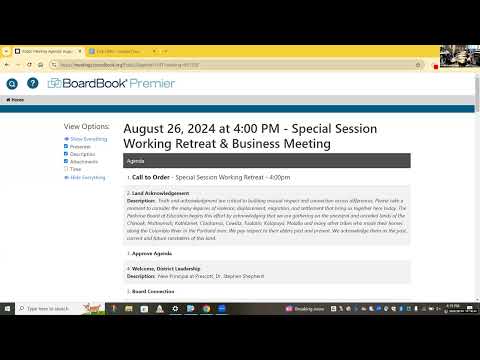
Parkrose SD 3 board members and administrators spent an extended August meeting narrowing a set of universal behavior supports they aim to implement with fidelity over the district’s first 90 days of the school year.
Michael, the district superintendent, opened the session as a working retreat and asked teams—split into elementary and secondary groups—to identify the top 3–5 “high‑leverage” universal practices the district can standardize across classrooms. He and other administrators said the intent is to align board goals with classroom practice and to create observable expectations for 30‑, 60‑ and 90‑day checkpoints.
The discussion produced a recurring list of proposals staff and students said should be universal: greeting students at the door; clearly stated, practiced and reinforced classroom expectations; consistent adult presence during transitions; timely positive feedback and immediate corrections; regular academic/social opportunities such as structured talk time; counseling and support lessons; sensory materials and flexible seating options. Staff emphasized training and supports for adults so practices are carried out consistently rather than imposed as mandates.
Students and several administrators underscored the role of tone and relationships. “How are you doing? Is everything okay?” an unidentified student said during a group conversation about one‑on‑one check‑ins, urging a gentle, relationship‑based approach instead of punitive responses.
Leaders also announced a districtwide communication protocol: ParentSquare will be used by every school, and principals are expected to send at least two broad communications to families during the first 30 days so parents with children at multiple schools see consistent information.
The board and administrative team set a practical follow‑up timeline: an administrative meeting on Sept. 11 to define the specific 30‑day observable supports, a 60‑day review, and a 90‑day checkpoint near winter break. The district said consultants who had worked earlier with staff will rejoin the process to support implementation and monitoring.
The board did not take formal policy action at the meeting; the session focused on defining practice, planning professional development, and determining how principals and classroom observers will check for consistent use of the agreed practices.