Get Full Government Meeting Transcripts, Videos, & Alerts Forever!
Get email alerts on the Board Finances Compact Ce topic
No spam. Unsubscribe anytime.
Board reviews finances, continuing-education schedule and interstate compact progress
Summary
Directors reported a $40,834 deficit for FY 2023–24 and reserves of about $1.18 million; the board approved multiple continuing-education provider dates for 2025 and discussed the cosmetology compact and an aesthetics compact in development.
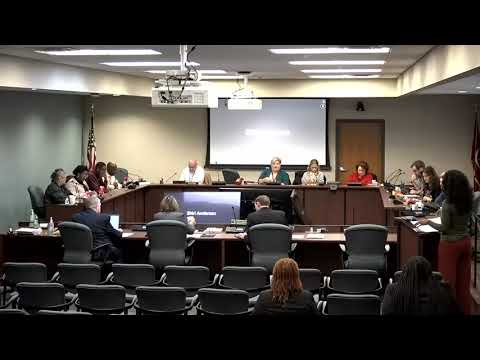
At its Dec. 2 meeting, the Cosmetology and Barber Examiners Board reviewed financial results and approved continuing-education (CE) provider dates for 2025 while discussing interstate compact developments for licensure mobility.
Executive Director Roxanna Gamusio reported the board closed fiscal 2023–24 with a deficit of $40,834 and reserves of $1,181,639. Through October the board showed a $16,799 surplus and reserves at $1,198,438. Gamusio said the board spends about $3 million annually and that fee changes will be considered later, especially as interstate compacts alter reciprocity flows.
The board approved dates submitted by providers including the University of Tennessee–Knoxville, the Confident Educator sessions (virtual), the Beauty Educators Leadership Conference (DCI Academy), TSU (Avon campus), Thomas Jamessessions and KINCC Education Group. Members discussed past provider cancellations, the practicalities of hybrid sessions, and a two-session-per-provider limit intended to reduce late cancellations.
Members also discussed the cosmetology compact and an emerging aesthetics compact. Staff explained the compact's statutory structure — cited in the meeting as "62 dash 4" — and said the compact does not mandate a single national exam; rather, it allows states with appropriate education and assessments to participate without forcing a uniform national test. A board member who reviewed a national exam in Kansas City said the theory portion was consistent with Tennessee standards.
The board did not set a timetable for fee changes but asked staff to track the compact's implementation and bring fee scenarios forward as interstate licensing flows become clearer.