Get Full Government Meeting Transcripts, Videos, & Alerts Forever!
Get email alerts on the Affordable Housing topic
No spam. Unsubscribe anytime.
Council signals preference for ownership model at Sparrow site, seeks AMI targets and RFP timeline
Summary
Councilors favored focusing on homeownership at the Sparrow site with a preference for lower AMI levels (target range 60–80% with flexibility to 100% if needed). Staff expects HUD Pro award notifications in February and to issue an RFP in late winter or early spring.
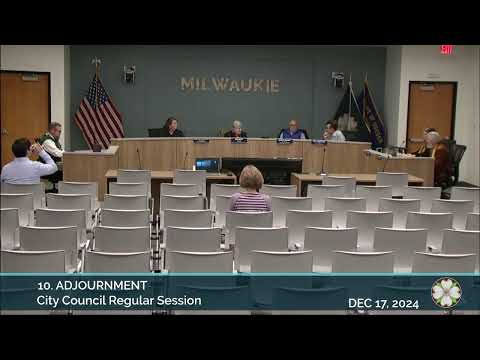
Milwaukie city staff and councilors revisited goals for the long‑vacant Sparrow site on Dec. 17, with city staff recommending an ownership‑focused development approach and councilors broadly endorsing a preference for affordability targets that prioritize lower area‑median‑income households while allowing practical flexibility for financing.
Assistant City Manager Joseph Brillio summarized staff work since the September study session, including a briefing with developer Jesse Ledesma about homeownership models. Brillio said staff now lean toward ownership models that aim to preserve long‑term affordability and suggested an upper cap around 80% of area median income (AMI) for ownership units, with the council discussing a preferred target range of 60–80% AMI and a practical cap of 100% if necessary to make projects feasible.
Why it matters: the Sparrow site has been in city planning discussions for years; determining whether to pursue rental or ownership models and where to set affordability levels will shape the city’s RFP, financial leverage strategy and timelines. Staff noted brownfield remediation, transportation coordination with county partners and financing timelines as constraints.
Council discussion focused on trade‑offs: some councilors said 60–80% AMI is an achievable target that translates to meaningful local affordability, while others urged patience because deeper affordability levels can lengthen financing timelines and complicate developer interest. Council President Massey and others urged a preference for models that preserve long‑term affordability beyond the first sale, such as community land‑trust arrangements or equivalent instruments.
Staff noted the city submitted a HUD Pro application with the county and housing authority for $1,000,000 in infrastructure funding and expects an award notice in February; staff proposed releasing an RFP once grant outcomes are clear, likely in late winter or early spring, with a 45–60 day response window.
Representative quotes: “If we want ownership, we should aim for 60 to 80% AMI with a cap of 100% if needed,” Councilor Khosroabadi said during deliberations.
“We are building the plane, and we’re gonna see if it flies,” Assistant City Manager Joseph Brillio said, describing the RFP and negotiation process.
What’s next: staff will prepare RFP materials and return with a surplus hearing and RFP authorization in early 2025 after HUD Pro results are known; council did not adopt a binding cap but signaled the discussed preference and asked staff to include preference language for land‑trust or equivalent models to preserve long‑term affordability.
No formal vote was taken on final AMI levels; council provided direction for staff to proceed toward an ownership‑focused solicitation and to include preference scoring for proposals that use land‑trust or equivalent models to maintain affordability.