Get Full Government Meeting Transcripts, Videos, & Alerts Forever!
Get email alerts on the Library Policy topic
No spam. Unsubscribe anytime.
Board introduces new library materials policy to meet state requirement; stricter ban motion fails
Summary
Administrators presented Policy IIAC to align district library materials rules with recent state law language; staff said the language derives from the state library and a motion to prohibit purchase or provision of "obscene" materials on district premises died for lack of a second.
The Huron School District 02-2 board received an introduction to proposed Policy IIAC on the selection and adoption of library materials, a change administrators said is required by new state language. The policy introduction coincides with the district strategic-plan objective for learning environment and is scheduled for a first reading at the next meeting.
Administrators explained the change was prompted by recent legislative action and guidance from the state library. Missus Peetz stated that the language in question "had to be in policy" after the last legislative session and that the district typically follows the state library's guidance when drafting local policy. She said the legal definition of "obscene" cited in the proposed policy uses a three-part test and thus only rises to that level when all three criteria are met.
One board member moved to add a stricter provision: "The school library does not purchase or provide obscene materials to students," reasoning that minors could read material in the library even if check-out rules exist. That motion received discussion about what titles, if any, already exist in district libraries and about whether the exact wording must mirror state-mandated language. The chair and administration reiterated that the item was an introduction and that the policy would return for a first reading so additions could be suggested; the motion to add the stricter phrasing died for lack of a second.
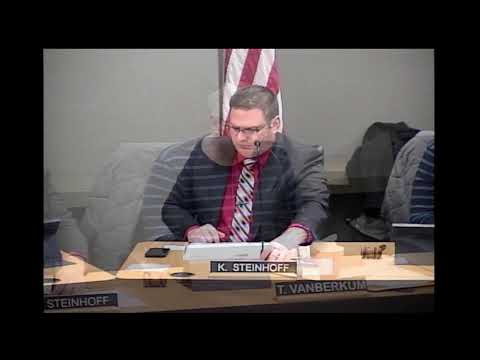
Administration asked board members to submit suggested language to Dr. Steinhoff before the next meeting. Officials cited House Bill references and ASBSD (Associated School Boards of South Dakota) policy templates as background material they reviewed while preparing the district language.