Get Full Government Meeting Transcripts, Videos, & Alerts Forever!
Get email alerts on the Municipal Utility Districts topic
No spam. Unsubscribe anytime.
Victoria council consents to Willow Creek MUD after developer presentation
Summary
Council voted to consent to creation of the Willow Creek Municipal Utility District in the city’s extraterritorial jurisdiction following detailed staff and developer presentations about MUD powers, financing and a proposed 157‑acre retirement‑oriented subdivision.
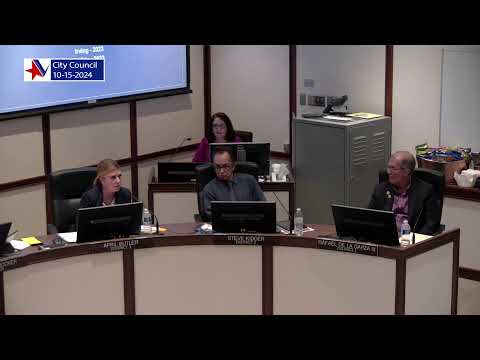
The Victoria City Council on Oct. 15 consented to the creation of the Willow Creek Municipal Utility District (MUD), allowing the developer to begin the formal MUD petition and Texas Commission on Environmental Quality (TCEQ) review process.
City staff framed the consent as a permissive first step. A city presenter explained that MUDs are political subdivisions authorized by the Texas Constitution and Texas Water Code (chapter 54) to construct and finance water, sewer, drainage and related infrastructure and, where appropriate, parks and recreational facilities. The staff presentation emphasized that a city consent does not make the city financially liable for MUD bonds and that the TCEQ and Attorney General review feasibility before bonds may be issued.
Developer representatives described a concept for a 157‑acre single‑family community in the city’s extraterritorial jurisdiction (near Northside Road and Parsons Road) that they said would include amenity lakes, a trail network and pocket parks. Developer Scott Finfer said the team sees an opportunity to build an amenity‑rich community attractive to retirees and told council, “if we want to get a MUD, we can get a MUD. You guys technically couldn't stop us, but that's not our style,” adding the team preferred to work cooperatively with the city.
Engineering and legal consultants explained the financing mechanics: the developer would construct infrastructure, taxable value would be created as homes are built, and only after sufficient taxable value exists would bonds be sold and the MUD reimburse the developer. Consultant Mindy Kainey explained that the attorney general and TCEQ have feasibility rules that generally prevent MUDs from issuing bonds until the taxable base can support debt service.
Council members asked about impacts on city utilities, the potential for future annexation, and how property and sales taxes would be allocated while the MUD exists. Staff said the developer is responsible for upfront infrastructure and that annexation and revenue capture could be negotiated later; staff noted annexation before the MUD debt is paid would transfer debt to the city.
After questions from council and the public, a motion to adopt the staff recommendation to consent to the creation of the Willow Creek MUD was moved, seconded and approved by voice vote.
Next steps described by staff and the development team include preparing required engineering and market studies, submitting materials to TCEQ, and subsequent city review of platting, development agreements and any requests for city‑provided retail utility service.
The council vote was procedural consent to begin the MUD process and does not approve any platting, bond issuance or city takeover of utilities; those would be separate, later actions.