Get Full Government Meeting Transcripts, Videos, & Alerts Forever!
Get email alerts on the Noise Regulation topic
No spam. Unsubscribe anytime.
Wichita Falls council hears extensive public comment on proposed downtown outdoor‑noise rules; no ordinance vote
Summary
City attorneys presented a draft downtown outdoor‑noise ordinance that would ban outdoor music between 10:30 p.m. and 7 a.m., set a 70 dB unpermitted limit (85 dB with permit), and create a permit process. Dozens of residents and downtown businesses urged stakeholder study; council directed further outreach and took no vote.
City attorneys presented a draft downtown outdoor‑noise ordinance at the Oct. 15 Wichita Falls City Council meeting and asked council for guidance on whether to pursue a downtown‑specific regulation. The draft would limit outdoor music and loud noise within a mapped downtown district between 10:30 p.m. and 7:00 a.m., set an unpermitted maximum sound level of 70 decibels measured at the property line and allow up to 85 decibels with a permit.
James McKechnie, who led the presentation, described the proposal as modeled on an Austin ordinance and said exceptions would include permitted city events, parades, emergency vehicles and enclosed indoor venues. "The general rules are there's no outdoor music, or loud noise between 10:30 PM and 7 AM within the district," McKechnie said, and noted that a permit regime (12‑month standard, 6‑month for outdoor music venues) would provide flexibility for recurring venues.
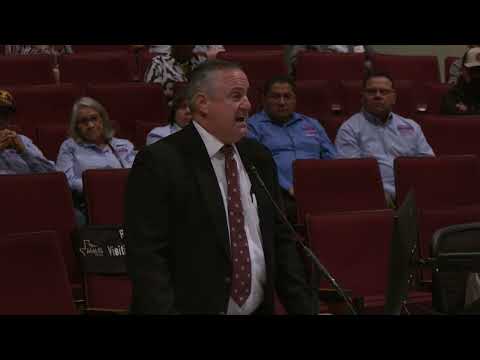
Public comment was extensive and divided. Business owners and event organizers warned that a 70 dB unpermitted cap and a 10:30 p.m. cutoff could curtail festivals and downtown economic activity, impose new fees and raise enforcement burdens. "The proposed ordinance would impose one more fee on the business community that already is struggling," said Ron Kitchens, a downtown business representative. Theater and arts organizations described repeated incidents in which outdoor festival stages compromised indoor performances and asked for controls on stage placement and orientation. "Performers cannot perform," said a theater representative, urging safeguards for ticketed indoor events.
Several technical questions were raised about enforcement and measurement, including which decibel weighting scale (dBA vs. dBC) would apply and who would operate and certify sound meters. Dusty Potter, chair of Downtown Wichita Falls Development and an audiology professional, urged the council to specify measurement standards and cautioned that typical outdoor live music will exceed the proposed unpermitted threshold.
City staff and the police described current enforcement as a "reasonable person" standard and said the police could use calibrated meters if available, but acknowledged more precise policy language and stakeholder input are needed. Multiple council members recommended forming a task force of residents, business owners and event organizers to refine technical standards, fee structures and enforcement protocols. Council took no vote on the draft ordinance and directed staff to pursue broader stakeholder engagement.
Next step: staff will convene stakeholders to work through measurement standards, permit terms and enforcement mechanisms before returning to council with a refined proposal.