Get Full Government Meeting Transcripts, Videos, & Alerts Forever!
Get email alerts on the Gunter 66 Development topic
No spam. Unsubscribe anytime.
Gunter council approves creation of 'Gunter 66' PID, annexation and zoning for new 60‑70‑foot‑lot neighborhood
Summary
The Gunter City Council voted to create the Gunter 66 Public Improvement District to help fund off‑site water and sewer infrastructure for a roughly 66‑acre single‑family development, approved a voluntary annexation and adopted related zoning changes after public comment and council debate over traffic, density and design.
The Gunter City Council voted on Oct. 28 to create the Gunter 66 Public Improvement District (PID), adopt an ordinance annexing the property and approve zoning changes that clear the way for a single‑family development on roughly 66 acres along State Highway 121.
The actions, taken after a public hearing and extended council discussion, authorize the PID that developers say will finance off‑site water and sewer work needed to serve about 200–210 single‑family lots and a small area of C‑1 neighborhood commercial and open space. Council recorded resolution number 2024‑10‑23‑1 for the PID and read an ordinance number for the zoning matter into the record during the meeting.
Why it matters: The PID is a financing tool that places assessments on properties inside the district rather than on the city’s general fund. Proponents said the bonds will be non‑recourse to the city and will allow smaller up‑front home prices by spreading infrastructure costs over time; opponents raised concerns about traffic, emergency services capacity and the quality of design for dense, small‑lot subdivisions.
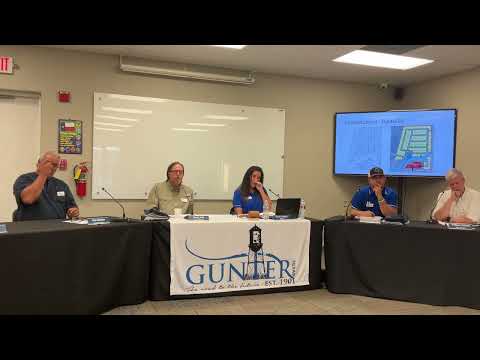
Developer presentation and financing An unidentified city presenter and developer representatives said the project covers about 66 acres with roughly 202 single‑family lots (other remarks during the meeting referenced 208 homes) and that a substantial amount of off‑site sewer and water infrastructure is required. The presenter said roughly 32% of the project cost would be funded with PID bonds and that buyers in the PID would pay a one‑time assessment that can be paid in full or amortized over up to 30 years as part of their purchase.
Sarah Landiak, counsel for the developer Fraser Capital, told the council the PID bonds are structured as non‑recourse to the city. "No PID bonds have ever defaulted in Texas, literally ever," she said, and added that the infrastructure installed for the PID would increase water availability to the area.
Public comment and council concerns Marilyn Davis, a resident at 21065 Farm Market Road 121, testified during the public hearing: "I'm not opposed to the annexation. I'm opposed to the number of houses because of traffic and water." Her remarks captured the primary public concerns — traffic congestion on Preston and Highway 121 and whether city water and emergency services could absorb additional demand.
Several council members echoed design and density concerns. One council member said the layout looked "crowded" and criticized straight rows of small lots, saying such patterns "add street congestion" and create greater service demands for police, fire and ambulance. City staff and developers responded that the project includes roughly eight acres of nature preserve and wetland areas and that design features such as shorter, curvier streets and green belts are included in the exhibits.
Affordability and lot sizes Council and staff discussed a value‑to‑lien ratio the presenter described as about 3.47, which attendees said illustrated developer commitment to the project. Staff said many of the homes on 60‑ and 70‑foot lots would be market driven and that typical floor plans would range around 2,800 to 3,200 square feet, with some larger models possible. The presenter offered a sample comparison saying a 60‑foot‑lot house without the PID could price around $777,380 versus about $648,000 with the PID assessment spread out, a difference the council said could improve entry affordability.
Council action and recordkeeping After discussion, a motion to create the PID was made, seconded and approved by the council; the resolution creating the PID was entered into the record as 2024‑10‑23‑1. The council also closed an open public hearing on a voluntary annexation and voted to approve the annexation ordinance. Finally, the council adopted the zoning ordinance that rezoned parts of the frontage and internal parcels to a planned development (PD) allowing neighborhood services and garden‑office style uses on the commercial frontage.
The meeting record shows multiple council members voting "Aye" on the annexation and zoning ordinances; the council then announced it would move into an executive session under Texas Government Code 551.071 to consult the city attorney on pending NSF litigation.
What’s next With the PID created, the developer and city will move forward on engineering and bond issuance steps required to start off‑site infrastructure construction; the developer said it will market the project when the process advances and that the commercial frontage is likely to be held until future demand clarifies specific uses. The council listed the litigation consultation as the next in‑camera item at the end of the public session.
Quotes "I'm not opposed to the annexation. I'm opposed to the number of houses because of traffic and water," Marilyn Davis said during public comment. "No PID bonds have ever defaulted in Texas, literally ever," Sarah Landiak, counsel for the developer, said in defense of the financing structure.
Ending Council recorded the PID resolution number on the record and the meeting proceeded to an executive session on city litigation; no additional public votes were recorded after the session announcement.