
Kerrville planners stress resilience and kick off downtown, Nimitz Lake studies
Get AI-powered insights, summaries, and transcripts
Subscribe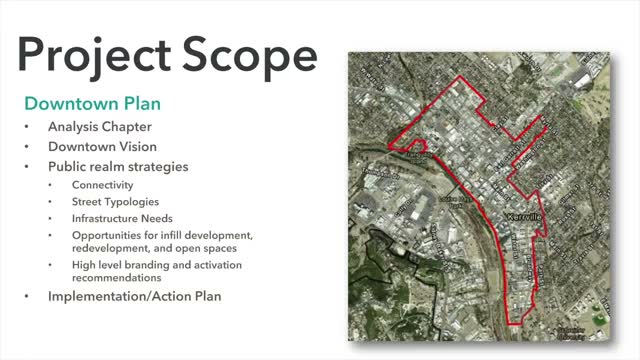
Summary
Friese and Nichols said resilience — defined by FEMA to include shocks and chronic stressors — will be integrated across chapters of Kerrville’s comprehensive plan; the team also outlined small-area work for downtown public realm improvements and a deeper study of the Nimitz Lake catalyst area.
Consultants said the comprehensive plan update will include two small-area plans and a concerted emphasis on resilience throughout the document.
Caitlin explained the downtown small-area plan will focus more on the public realm and connecting places — the pedestrian experience, outdoor spaces and public design — rather than only land-use mixes. The team also identified the Nimitz Lake area as a catalyst zone for deeper study and asked residents how they would like to see that area develop.
On resilience, the consultants cited FEMA’s definition and explained that resilience planning considers both "shocks" (sudden disasters such as ice storms or major weather events) and "stressors" (slow-building conditions that erode community capacity). Caitlin said integrating resilience is not just emergency response but also addressing housing conditions, infrastructure and services that help communities withstand and recover from disruptions.
The team assigned consultants to staffed stations: David at Nimitz Lake, Lahari at the downtown station, Chris for transportation topics and Caroline to guide resilience boards. Attendees were invited to speak one-on-one with consultants and leave feedback on vision and resilience boards.
Next steps: the resilience analysis and small-area recommendations will be refined as the team reviews feedback from CPAC, the DAC and the public interactive tools.