Get Full Government Meeting Transcripts, Videos, & Alerts Forever!
Get email alerts on the Cemetery Governance And Financing topic
No spam. Unsubscribe anytime.
Expert tells West Virginia lawmakers cemeteries face funding, oversight and climate risks
Summary
At a joint West Virginia committee meeting in Parkersburg, Mr. Lemasters, an attorney and funeral director, warned that many cemeteries lack enforceable oversight and endowment protections, cited examples of trust‑fund theft, and urged model legislation and practical tools to enable repairs or transfers of care.
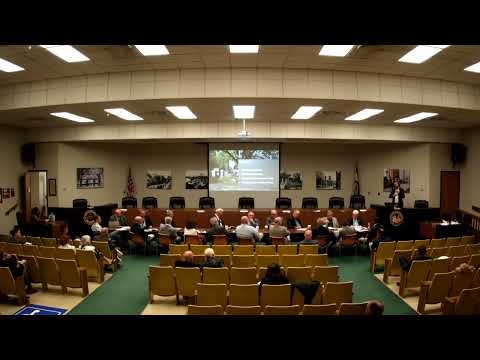
At a joint House and Senate committee meeting in Parkersburg, an attorney and funeral director identified gaps in state law that he said leave many West Virginia cemeteries at risk from depleted trust funds, declining burials and storm damage.
"We are at a point where there are more and more cemeteries across the country that just can't go on," said Mister Lemasters, the meeting’s presenter, who described his work as counsel to cemetery and funeral associations. He said cemeteries face three common pressures — money, inventory and physical damage — and that existing statutes are scattered and often lack practical takeover mechanisms.
The talk focused on two financial instruments central to cemetery operations: perpetual (endowment) care funds and pre‑need or merchandise trusts. "Perpetual care is typically money that is set aside," Lemasters said, adding that most cemeteries "have to live off of the interest" because the corpus generally cannot be touched. He also described a pre‑need trust rule cited in the materials that requires "40% of the sale price" of a grave space to be placed in a trust and noted other minimum requirements referenced for West Virginia.
Lemasters contrasted state approaches around the region. In Ohio, he said, abandoned‑cemetery provisions and a dispute resolution program allow townships to step in; Kentucky’s system requires a city attorney to file suit and funnels many matters through the attorney general’s office; Pennsylvania permits citizen petitions within a five‑mile radius to trigger township responsibility; Maryland maintains an Office of Cemetery Oversight and allows counties to appropriate or raise funds for repairs; and Virginia’s law permits partial takeovers and, in some cases, use of eminent domain.
He warned that liability generally "runs with the cemetery," which deters private buyers and corporate providers from assuming troubled properties. As an example of abuse that prompted regulatory change elsewhere, Lemasters cited the Burr Oak cemetery scandal in Illinois, saying "it was about $15,000,000 that was siphoned off of the cemetery, including trust funds" and that the case led to stronger state rules there.
Panel members asked practical questions. One member described storm damage that moved hundreds of headstones; another asked whether states require annual audits of endowments. Lemasters said some states require filing and audits at transfer, but that West Virginia’s reporting is largely tax‑focused and that no comprehensive inventory of the state’s cemeteries currently exists. He also noted FEMA and federal disaster aid can apply for major federally declared disasters, but that most grants he sees are small relative to catastrophic repair costs.
Lemasters recommended two broad remedies discussed at the meeting: clearer statutory triggers and authorities for government takeover or assistance in cases of abandonment or disrepair, and national model guidance (the International Cemetery, Cremation and Funeral Association, ICCFA, has convened model guideline work) to help states address abandoned and damaged sites, including gaps related to natural‑disaster damage and disinterment.
The committee approved routine minutes by voice vote and adjourned. Lemasters provided contact information and said he was available for follow‑up questions.