Get Full Government Meeting Transcripts, Videos, & Alerts Forever!
Get email alerts on the Sports Betting topic
No spam. Unsubscribe anytime.
Senate Judiciary hearing spotlights harassment, addiction and calls to ban college prop bets
Summary
Witnesses told the Senate Judiciary Committee that the rapid expansion of online sports betting has increased harassment, threats and addiction among student-athletes, and several witnesses urged banning prop bets on college athletes and stronger federal standards to protect players.
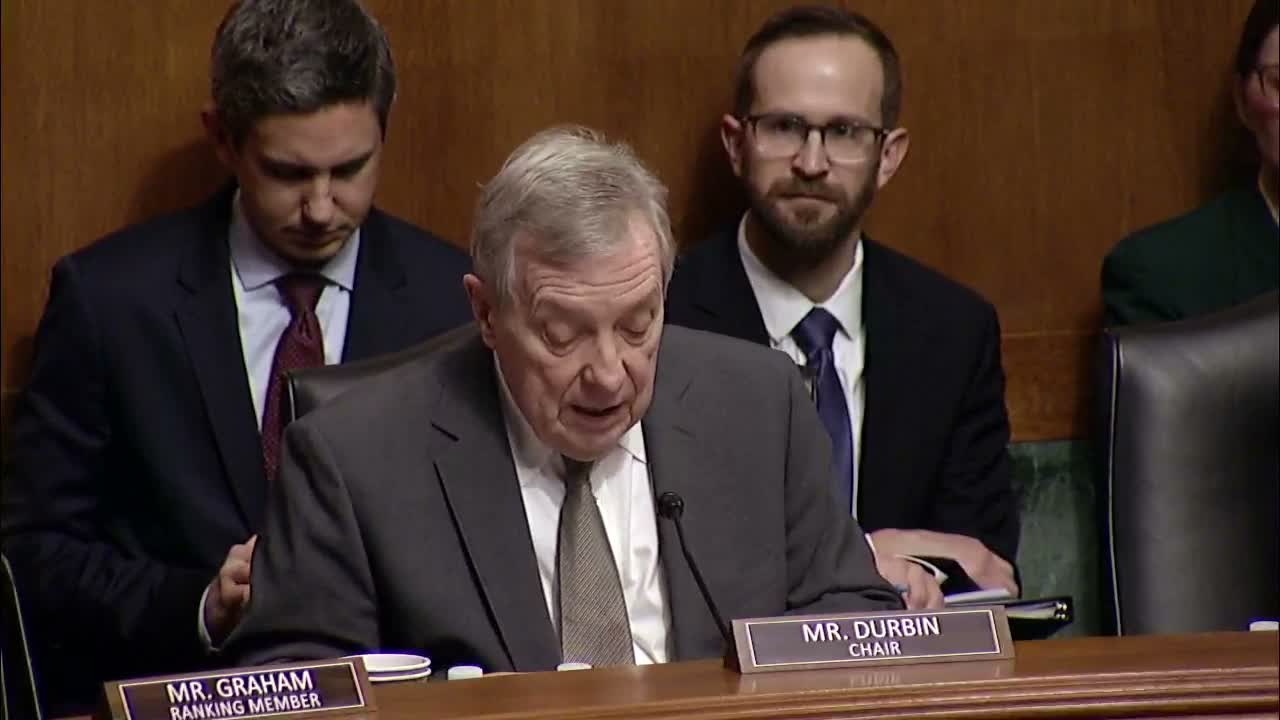
Chairman Dick Durbin convened the Senate Judiciary Committee’s final scheduled meeting of the 118th Congress to examine the rapid expansion of legal sports betting and its effects on athletes, integrity and public health. Testimony from athletic, regulatory and public‑health experts emphasized growing harms tied to online and micro‑betting.
Charlie Baker, president of the National Collegiate Athletic Association, told the committee that the spread of legal sports wagering since the Supreme Court’s 2018 PASPA decision has produced “harassment, social pressure and abuse” toward student‑athletes and said the NCAA’s surveys show 10–15% of Division I athletes reported being harassed by bettors. Baker said the NCAA supports efforts to “ban prop bets on college sports,” arguing such bets amplify the opportunity for coercion and threats.
Former NFL player Johnson Badamosi described direct effects on players: increased threats, harassment and pressure by bettors, sometimes extending to families and personal safety. Dr. Harry Levent, director of gambling policy at the Public Health Advocacy Institute at Northeastern University School of Law, framed online sports gambling as a growing public‑health crisis driven by AI‑enabled micro‑betting and constant, highly targeted advertising. “Sports have become the equivalent of a nonstop slot machine,” Levent said, arguing that the product itself is engineered to maximize addictive use.
Keith White, executive director of the National Council on Problem Gambling, described the scale of the problem from a treatment perspective: the council’s testimony cited roughly 9,000,000 Americans with gambling problems and urged federal funding reforms to expand prevention and treatment. Witnesses pointed to uneven state data collection and inconsistent responsible‑gaming rules across jurisdictions, which they said hindered a national view of risk.
David Reebuck, former director of New Jersey’s Division of Gaming Enforcement, urged that state regulators and tribal governments have experience and tools to protect consumers and preserve contest integrity, but he acknowledged cross‑state information sharing is uneven. Several senators, including Richard Blumenthal and Dick Durbin, pressed witnesses about federal proposals such as the SAFE Bet Act (which would set minimum federal standards) and a bill referenced in testimony that would return a portion of excise revenue to fund treatment (referred to in witness statements as the GRID/GRIT Act).
Senators’ questions focused on multiple policy levers: prohibiting prop bets on college athletes, regulating micro‑betting and targeted marketing, expanding treatment funding, and improving data sharing for integrity investigations. Baker emphasized the NCAA’s education programs, integrity monitoring and calls for removing prop bets tied to individual student‑athletes. Reebuck described New Jersey’s partnership approach with leagues and law‑enforcement tools to investigate threats and match‑fixing concerns.
The committee did not vote or adopt specific legislation during the hearing. Members signaled interest in pursuing further work — including exploring federal minimum standards and funding models for prevention and treatment — and Durbin closed by thanking witnesses and noting the hearing’s role as a starting point for continued congressional consideration.