Get Full Government Meeting Transcripts, Videos, & Alerts Forever!
Get email alerts on the Rate Case topic
No spam. Unsubscribe anytime.
PUC of Nevada limits NV Energy basic charge increase to $18.50, partially grants rate applications
Summary
The Public Utilities Commission of Nevada voted to partially grant Sierra Pacific Power Company d/b/a NV Energy’s rate applications (dockets 24-02026 and 24-02027), approving a draft order that raises the electric basic service charge for single-family residences from $16.50 to $18.50 rather than the utility’s requested ~$45 and disallows certain affiliate and incentive-pay costs.
The Public Utilities Commission of Nevada voted to partially grant Sierra Pacific Power Company’s rate applications for electric and gas service (dockets 24-02026 and 24-02027), approving a draft order that narrows the utility’s requested changes to rate design and denies recovery of specified affiliate and incentive-pay costs.
Commissioner Brown presented the draft order, saying the commission "grants in part" the applications and summarizing key rulings: the draft authorizes a reduced return on equity (approximately 9.65% for the electric division and 9.5% for gas), disallows certain affiliate cross charges and portions of short-term incentive pay, allows recovery of Tracy-area master-plan costs while requiring a regulatory liability account to capture revenues from new incremental customers, and adopts a rate-design change that sets the electric D1 residential basic service charge at $18.50 rather than the $45.30 the utility proposed.
Why it matters: The basic service charge is the fixed monthly fee customers pay before consumption. Consumer groups and climate advocates told the commission a large uptick would disproportionately harm low-income households and undercut rooftop solar adoption. Olivia Tanager, executive director of the Sierra Club Toiyabe chapter, urged the commissioners to adopt the draft that "would only increase the basic service charge by $2 instead of NV Energy's proposal," saying a large fee would “disincentivize rooftop solar rollout.”
Public input: Dozens of speakers urged the commission to reject a large flat fee. Dora Martinez, a blind advocate representing the Nevada Disability Peer Action Coalition and the American Council of the Blind, said the proposed $45 charge would "take away some of our grocery bills" and limit access to transportation and medical care; she also asked for help because the PUC’s website was not accessible to her screen reader. Bill Miller, another public commenter, criticized the utility’s proposal as an attack on rooftop solar and low-income customers and thanked the commission for resisting the utility’s original request.
Legal and technical takeaways: The draft order allows the utility to recover certain Tracy-area investments while placing amounts related to new incremental customers into a regulatory liability account to mitigate bill impacts for existing customers. The commission disallowed $1,858,000 and $37,000 in affiliate basic cross charges for Sierra Electric and Sierra Gas respectively, and held in abeyance roughly $5,350,000 (electric) and $1,040,000 (gas) of affiliate incremental cross charges pending adequate documentation. The draft also limits continued recording to costs incurred through the certification period for the AB 405 Net Metering Regulatory Asset and does not authorize the account going forward.
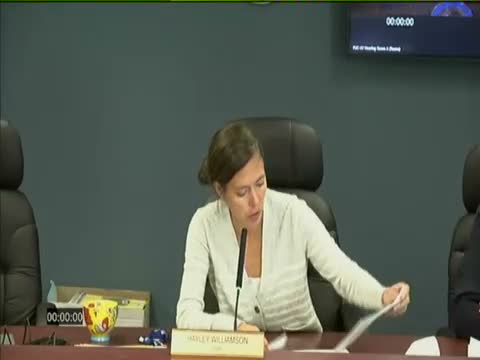
Vote and next steps: Commissioner Brown moved to adopt the draft order as modified by Commissioner Cordova’s edits; Chair Hilly Williamson seconded. The motion passed unanimously. The commission directed staff to issue the appropriate order. Commission staff also agreed to have a consumer-division representative contact Dora Martinez to explain the order and address accessibility concerns.
What the record does not resolve: Public commenters pressed broader policy changes — for example, performance-based regulation and a lower-cost model for low-income customers — but the commission’s action was limited to the draft order’s findings, rate-design changes and accounting-directed remedies. The commission did not adopt a comprehensive low-income rate plan on the record of this meeting.
The meeting adjourned after closing public comment.