
Broker outlines how districts could leave TRS, manage claims and cut premiums
Get AI-powered insights, summaries, and transcripts
Subscribe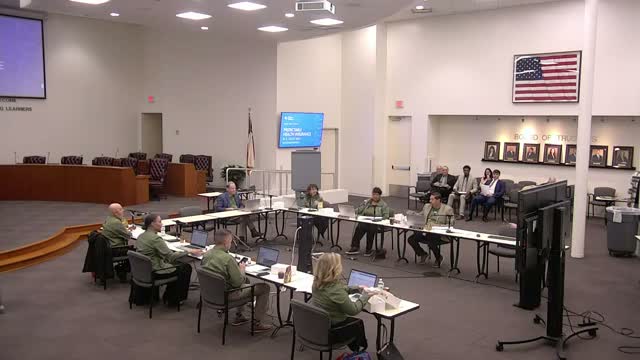
Summary
A benefits broker told Galena Park ISD trustees that districts can reduce premiums by shifting from TRS to a managed self‑funded or fully funded plan if they pair narrow local networks, telemedicine and active claim management; trustees raised access concerns in a local medical shortage area.
Shauna Robinson, owner of Robinson Brokerage Firm, told Galena Park ISD trustees the district could lower its health‑benefit costs by moving off the Teacher Retirement System's insurance arrangement and placing high‑cost members into tailored alternatives.
Robinson said the core of any shift from TRS is predictable claim management: "If you choose to leave TRS, then you need to have a really good idea of how you're gonna manage your claims," she said, outlining weekly claim reviews, stop‑loss coverage and guaranteed hospital rates negotiated for five‑year terms to limit volatility.
Trustees were shown how a customized, ZIP‑code–based network can produce lower negotiated prices for hospital care while keeping access for common local needs, and Robinson described an overlay program called Attentive that provides 24/7 telemedicine, nine free psychiatric visits and other services designed to increase plan usage and reduce costly emergency visits. She said medication spending has grown as a share of total health costs and described sourcing specialty drugs through a global supplier to reduce outlays; Robinson gave a case where a $24,000 specialty drug was obtained for roughly $8,000 through such channels.
Why it matters: Districts that reduce premiums can pass savings to employees and free up local budget capacity, but designing a narrow network can limit facility choices for people in areas with few nearby hospitals. Trustees repeatedly pressed Robinson on what access would look like for Galena Park employees, noting the community's limited high‑quality medical infrastructure.
What Robinson proposed: She recommended issuing RFPs for both fully funded and self‑funded models, building networks that prioritize hospitals near where employees live, and using a weekly claims monitoring system that flags high dollar claims for intervention or for moving individuals to alternative plans when appropriate. She also recommended continuity‑of‑care waivers for ongoing treatments, and said ambulance and emergency transport would be treated as exceptions so members would not be penalized in emergent situations.
Trustees' concerns and responses: Several trustees asked whether narrow networks would leave employees without local options. Robinson said design choices would emphasize nearby systems wherever possible and that specialized facilities (for example, MD Anderson or Texas Children's Hospital) can be included or allowed under continuation waivers. Trustees also requested the ZIP‑code heat map Robinson used for other districts; she agreed to supply that data to district leadership.
Next steps and follow‑up: Robinson offered to provide the district with modeled RFP language and a draft heat map, and she described ongoing work with other Texas districts as examples. Trustees did not vote or direct staff to pursue a specific option in the meeting; the presentation closed with an offer of further information and follow‑up materials.
Endnote: Robinson framed the approach as operationally intensive—requiring weekly claim review and contract negotiation—and told trustees a managed transition aims to preserve care for members while reducing the district's premium burden.