
Board backs $225,000 CMEA grants, licensing and testing gains, and starts rulemaking for disaster debris classification
Get AI-powered insights, summaries, and transcripts
Subscribe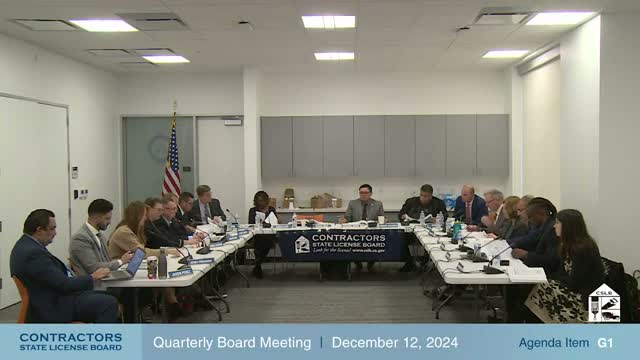
Summary
CSLB approved disbursement of $225,000 in Construction Management Education Account grants to six colleges, heard licensing and testing updates showing steady processing times, and unanimously directed staff to begin regulations to create a new C specialty classification for wildfire and flood debris removal. Staff estimated rulemaking and exam development could take 18 months to two years.
The Contractors State License Board approved distribution of $225,000 from the Construction Management Education Account to six public colleges and directed staff to begin work on regulations for a proposed C specialty classification for disaster debris removal.
Licensing committee chair Jim Ruhain reported the licensing and testing update: CSLB received over 12,000 applications in the last quarter, and staff have kept processing times at or under three weeks. Renewal volume and application disposition tables were noted in the packet. Testing chief Carol Gagnon said PSI administered about 54,000 exams for CSLB candidates between Nov. 2023 and Oct. 2024, with no testing backlogs and more than 4,900 exams scheduled in October 2024.
On the CMEA grants item, staff said the Department of Consumer Affairs approved increasing disbursement authority to $225,000 for fiscal year 2025–26; the board directed staff to distribute awards to identified colleges per the Construction Management Education Advisory Committee recommendations and contingent on Department of Finance approval. A roll-call vote carried the motion unanimously.
Board members then discussed and supported a staff proposal to create a new C specialty trade classification covering safety protocols, PPE, specialized training, and debris disposal methods for wildfire and flood cleanup. Carol Gagnon noted the hazards of post-disaster cleanup, citing potential exposure to toxic ash, smoldering debris and collapsing structures. "Cleaning out debris after a disaster is dangerous work," Gagnon said, describing the need for a trade description tailored to those risks.
Several board members asked whether existing classifications (for example C61 limited specialty or hazardous-site classifications) could be adapted; members emphasized requiring HAZWOPER certification or equivalent training. Staff said people immediately needed to perform work in Butte County and would supply lists of contractors who could currently perform cleanup under existing licenses while rulemaking proceeds. Staff estimated the exam process and regulations could take about 18 months to two years to complete.
The board moved to direct staff to begin rulemaking and move the matter to the licensing committee for further development; the motion passed on a unanimous roll call. Staff and the licensing committee will return with trade descriptions, exam development plans and regulation timelines for further consideration.