Get Full Government Meeting Transcripts, Videos, & Alerts Forever!
Get email alerts on the I15 Express Lanes topic
No spam. Unsubscribe anytime.
Residents, environmental advocates press California Transportation Commission on I‑15 Express Lanes review
Summary
Residents and environmental advocates urged the joint equity advisory committee and California Transportation Commission to require state‑approved environmental justice tools, consider transit and rail alternatives, and scrutinize the I‑15 Express Lanes Southern Extension before funding and approval.
Public commenters at the California Transportation Commission’s joint meeting with the interagency Equity Advisory Committee pressed officials to take a closer look at the I‑15 Express Lanes Southern Extension, saying the project’s environmental review skirted established state tools and did not consider transit alternatives.
Michael McCarthy, a Riverside resident and member of the Sierra Club, told the committee the I‑15 project “did an ad hoc analysis of environmental justice that didn't use any of the state or federal approved environmental justice indicators,” and said the review omitted alternatives such as rail, bus or van‑pool options and failed to analyze induced vehicle miles traveled.
Joaquin Castillejos, an Inland Empire resident and environmental justice advocate, said the EAC exists to amplify marginalized voices and urged the committee to hold agencies accountable so decisions “benefit the people” and not only road expansion interests. Marvin Norman, also from San Bernardino, expressed similar concerns, noting regional agencies have repeatedly studied rail in the corridor and urging the state to align funding with stated climate and equity goals.
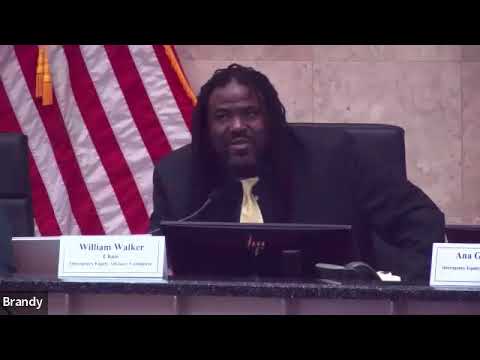
The commenters recommended the committee direct staff to follow up with regional agencies and Caltrans and to bring the I‑15 project back for discussion. Chair William Walker and Commission members acknowledged the concerns and committed staff to connect members of the public with the appropriate regional contacts. Commissioner comments during the meeting emphasized the need to examine whether projected VMT effects were factored into project decisions and to add the corridor review to a future agenda if warranted.
The public remarks reflect an ongoing tension the committee has flagged between large freight‑movement projects and community priorities for active transportation, cleaner air and alternatives to highway expansion. Committee members said follow‑up would include linking residents with local metropolitan planning organizations and district staff so community questions can be answered and recorded for future consideration.