Get Full Government Meeting Transcripts, Videos, & Alerts Forever!
Get email alerts on the Global Magnitsky Implementation topic
No spam. Unsubscribe anytime.
Senate committee presses executive branch on implementation, asset use and coordination of Global Magnitsky sanctions
Summary
At a Senate Foreign Relations hearing, witnesses and senators urged faster, more coordinated use of Global Magnitsky sanctions, recommended tougher action on enablers and proposed legislation to allow seizure and repurposing of frozen assets for victims.
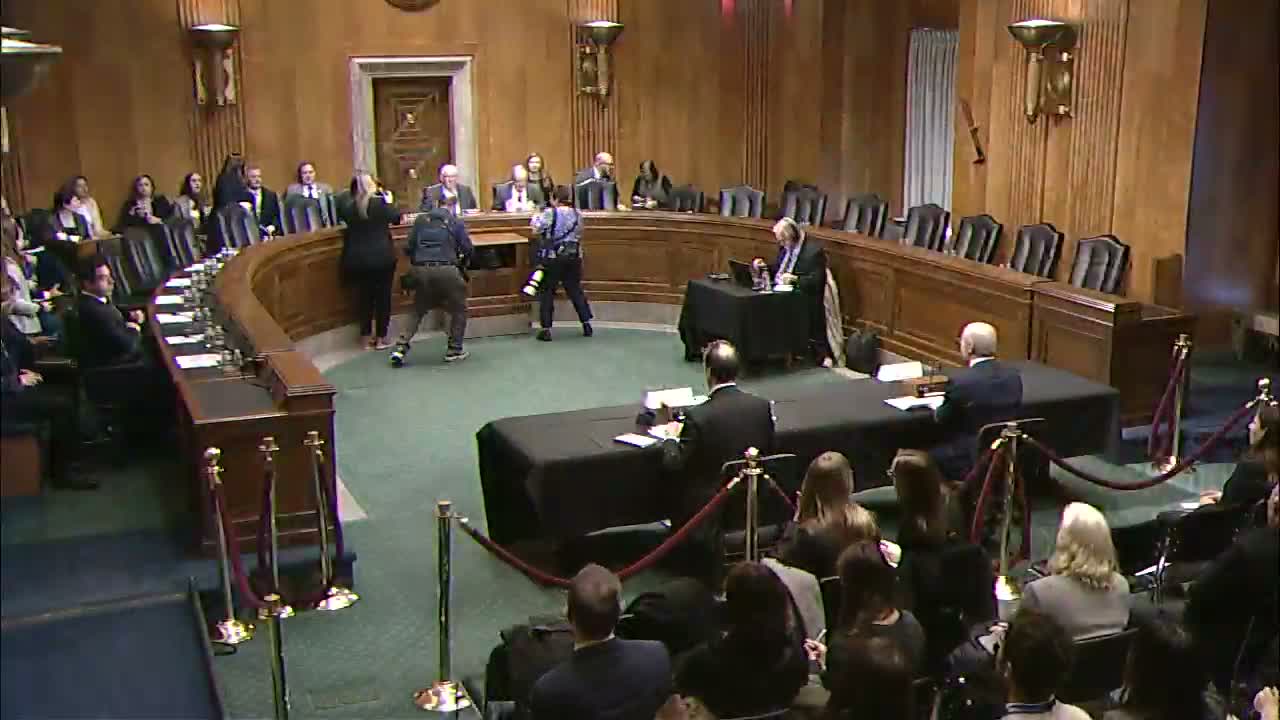
WASHINGTON — The Senate Foreign Relations Committee held a hearing on the implementation of Global Magnitsky sanctions, with Chairman Carden opening the session and two witnesses — Adam Keith of Human Rights First and William Browder — testifying on gaps in enforcement and possible reforms.
Carden recounted the law’s origins and its purpose, saying the Magnitsky framework allows the United States to “hold abusers accountable even if their own country does not.” He introduced the witnesses and asked whether the executive branch can be directed to act more quickly when Congress and civil society identify perpetrators.
Adam Keith, senior director for accountability at Human Rights First, urged sustained congressional oversight and better information-sharing with State and Treasury. He said targeted sanctions have produced concrete results in individual cases but cautioned they are not a “magic wand.” Keith told the committee that use of the Global Magnitsky tool fell in 2022–23 by some measures and that drop has reduced instances where actions appeared responsive to civil-society recommendations.
William Browder, the campaign’s most prominent private advocate, described the rapid global spread of Magnitsky-style laws — now in roughly 35 countries, he said — and pressed Congress to consider legislation modeled on what witnesses called the “Repo Act” to address the disposition of frozen assets. “Why not seize those assets? And give those assets to the victims?” Browder asked, citing Canada’s precedent for transferring forfeited proceeds.
Committee members raised three recurring concerns: slow executive-branch decision-making, international inconsistency in listings, and evasion by sanctioned individuals through family transfers and financial enablers. Chairman Carden and Ranking Member Risch both criticized bureaucratic delays in State and Treasury, with senators saying interagency deliberations and evidentiary requirements often slow designations and asset actions.
On timing and process, Keith acknowledged the need for evidentiary rigor that will withstand legal scrutiny but recommended that Congress press agencies to explain internal procedures and staffing so cases can move faster. He also cited civil-forfeiture and judicial oversight as mechanisms for converting frozen assets into forfeited property after due process.
Members used country examples to highlight policy challenges. Senators discussed Sudan and recent unrest in Georgia; witnesses said corruption and oligarch influence can erode democratic institutions and that sanctions are most effective when allied jurisdictions match actions. Keith and Browder both urged greater coordination with democracies that have adopted Magnitsky regimes so listings and enforcement are harmonized.
Witnesses also flagged practical enforcement gaps. Browder described the role of “enablers” — bankers, lawyers, trustees — who help transfer assets to avoid sanctions and pointed to new avenues of evasion such as cryptocurrencies. Keith said that without consistent matching by allies and better resourcing at Treasury and State, the United States’ actions can be less effective.
The hearing concluded with a call from Carden for the committee to review statutory and administrative barriers and to consider legislative options that would strengthen coordination, limit evasion, and enable a path from freezing to confiscating assets for victim redress. The committee adjourned after senators pledged to pursue oversight and potential legislative fixes.